
Rodri, the Golden Ball, and the twenty-month comeback that broke the market
 Available in US
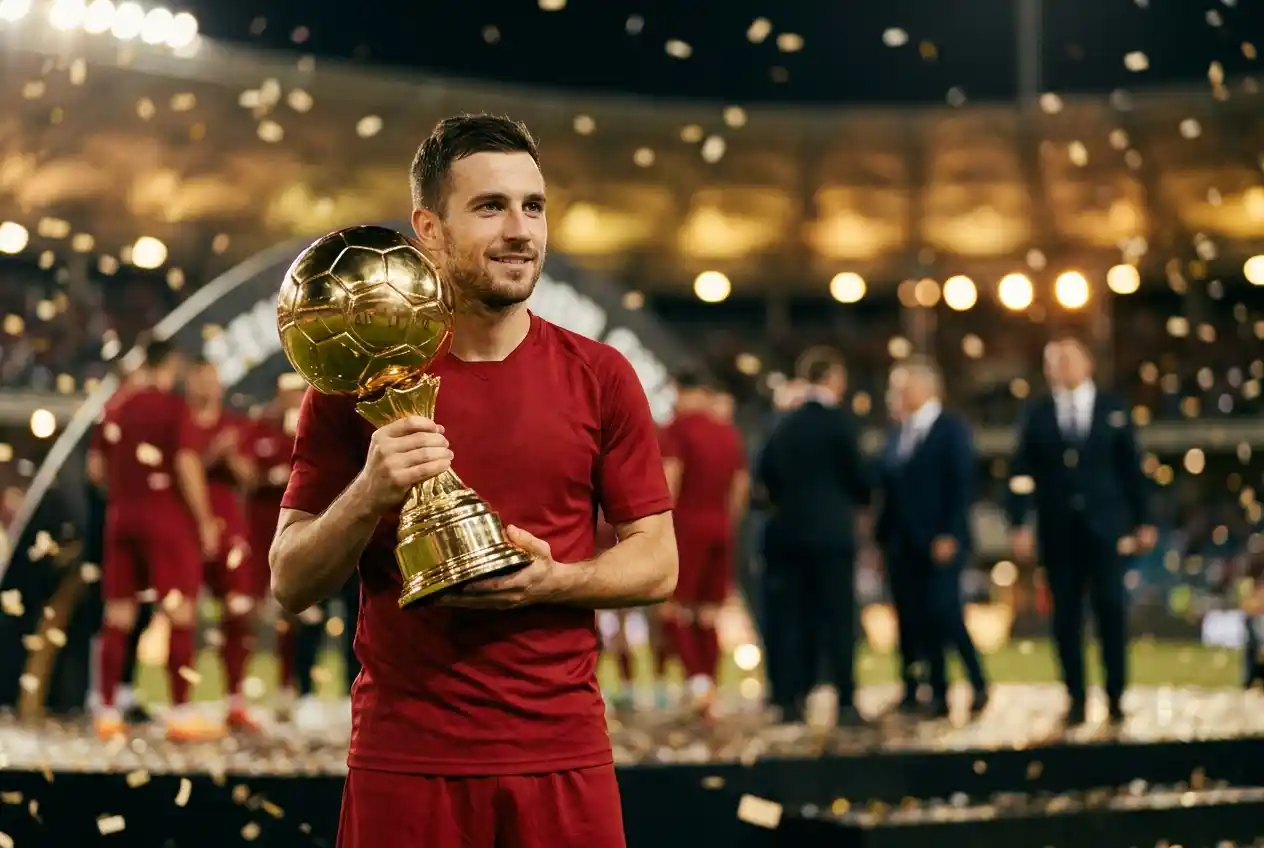
If you were watching the medal ceremony at MetLife at breakfast on the Monday morning here in Aotearoa, you saw a queue that did not run in the order the market said it would. Lionel Messi, favourite for the Golden Ball at TAB NZ at roughly 1.11, walked up second and lifted the Silver. Behind him, Kylian Mbappé — hands full with the Golden Boot — took the Bronze. Above them both, Rodri Hernández, priced at around 11.00 going into the final and captain of Spain, held the Golden Ball. It was, in a tournament where every other pre-final favourite delivered, the one market shock. And for anyone who had followed his knee since September 2024, it was also the one narrative that felt earned.
The knee, the lay-off, and Guardiola’s promise
The injury happened in a Premier League match in September 2024: a right-knee anterior cruciate ligament rupture that ended his 2024-25 club season. Pep Guardiola said, in the aftermath, that "the real Rodri" would return at the 2026 World Cup. That is the sort of line that reads well in the morning papers and dies quietly in the archive when a player never makes it back. Rodri made it back. Twenty months post-surgery, he anchored a Spain 4-3-3 that won all eight matches at the tournament and conceded a single goal. He also finished the edition with about 756 completed passes — the single-tournament record, past Xavi’s 599 from 2010 — and about 1,343 career World Cup passes, past Dunga’s 1,306. Two records, one comeback.
- Rodri won the 2026 Golden Ball as Spain’s captain; Messi was the pre-final favourite at ~1.11 at TAB NZ, Rodri was priced at ~11.00, and this was the only award market at the tournament that defied its closing price.
- The award landed roughly twenty months after he ruptured his right ACL at Manchester City in September 2024, an injury that ended his 2024-25 club season.
- He finished the tournament with about 756 completed passes — the single-edition record, past Xavi’s 599 — and about 1,343 all-time World Cup passes, past Dunga’s 1,306.
- Spain conceded one goal in eight matches with Rodri anchoring; he did not miss a minute of the knockout run.
- Every other pre-final Spain-favourite market (World Cup outright at 1.67, Simón Golden Glove at 1.13) settled the same way as the price — Rodri’s was the exception.
The quote that framed the ceremony
He is not a man who sells his lines. But at the ceremony he offered two, both to The National on 20 July, that are worth reading twice:
- “It feels like the perfect script. I certainly didn’t expect this.”
- “I’d love for the younger generations to see that a player who touches the heavens, then descends into hell, can come back. It’s a lesson in overcoming adversity.”
That second sentence is the reason the Golden Ball, this year, is not the ordinary story of a captain of the champion side. It is the story of a man who lost most of a season to a knee reconstruction and walked back onto a World Cup pitch with something to prove — not to the market that had him at 11.00, but to himself.
The market: the one that got away
I want to walk through the outright board as it stood at TAB NZ on the morning of the final, because — apart from this one — it was a book that came in.
- World Cup outright: Spain to lift, 1.67. Settled. Favourite delivered (extra time).
- Golden Boot: Mbappé, 1.04. Settled. Ten goals, the bronze-final brace decisive.
- Golden Glove: Simón, 1.13. Settled. Seven clean sheets in the edition, six consecutive across two World Cups, 650 consecutive World Cup minutes.
- Golden Ball: Messi, ~1.11. Did not settle. Rodri, ~11.00, took it.
That is one market out of four — a ~1.11 favourite beaten by an ~11.00 outsider — in a tournament where the other three favourites came in at short prices. If you had even a nominal stake on Rodri at 11.00, you would have paid off the coffee for the week; the value came from anyone who watched the comeback and priced the story in rather than the headline names.
The football, not the narrative
Take the narrative away and there is still a football case. Rodri played every minute of Spain’s knockout run. He completed passes at a rate no player at the tournament matched, ended possessions in the Argentina half, and — with Fabián Ruiz and Dani Olmo alongside — controlled the midfield of the final so completely that Argentina finished the full 120 minutes without a single shot on target. That is not the box score of a team that got lucky; it is the box score of a team whose No. 6 did not let go of the game.
And the award did not go to the obvious names. Not the leading scorer — that was Mbappé, on 10, who took the Bronze Ball. Not the leading assist-maker — that was France’s Michael Olise, on seven, a new single-tournament record. It went to the man who ended possessions. However the vote was reached, it is a Golden Ball that reads as a reward for a role rather than a highlight reel.
What Aotearoa can take from it
For a country in the middle of a conversation about pathways, there is a lesson here that is not about superstars. Rodri did not win the Golden Ball by winning a duel with Messi at the pinnacle — he won it by giving his coach exactly what a Spain-shaped 4-3-3 needs. That is the sort of role modelling for Kiwi youth football that lasts longer than a viral goal. Elijah Just gave us the moment everyone replayed. But if we are going to build a team that survives a group at 2030, we will build it on the back of a No. 6 who plays like Rodri played this month.
For the tournament arc, see Spain 2026 — the eight-match masterclass and the final recap in NZ times. Broader outright analysis lives on the Odds and Predictions pillar; pre-tournament outright picks are on Who will win the World Cup 2026? and Dark horses.
Sources: The National (20 July 2026), ESPN, Yahoo Sports, beIN Sports, Wikipedia (2026 FIFA World Cup final), CityXtra.
