
World Cup 2026 Betting: Your Complete Guide to the Beautiful Game's Biggest Stage
 Available in US
Your edge for every World Cup match
48 Teams
104 Matches
16 Stadiums
What Every Kiwi Punter Needs to Know Before Kickoff
- The 2026 FIFA World Cup runs from 11 June to 19 July across the USA, Mexico and Canada — 48 teams, 104 matches and a brand-new format with a round of 32 for the first time.
- TAB NZ is the sole legal operator for sports betting in New Zealand following the June 2025 amendments to the Gambling Act, meaning all World Cup wagers go through a single platform using decimal odds in NZD.
- The All Whites are back at the World Cup for the first time since 2010, drawn into Group G alongside Belgium, Egypt and Iran — with all three matches kicking off at convenient daytime hours in NZ.
- Outright markets favour Argentina, France and Brazil at the top, but the expanded format opens realistic value in group winner bets, third-place qualification and individual player markets.
The Road to 2026 — How Football's Greatest Show Got Even Bigger
I remember sitting in a Moscow bar during the 2018 World Cup final, watching France lift the trophy, and a fellow analyst leaned over and said, "Enjoy this format while it lasts." He was right. FIFA had already voted — unanimously — to expand the tournament from 32 teams to 48, and the decision would reshape everything we thought we knew about World Cup betting. That vote, taken in January 2017, set the stage for what is about to become the largest single-sport event in history.
The 2026 FIFA World Cup runs from 11 June to 19 July across three host nations — the United States, Mexico and Canada. Sixteen stadiums spread over a continent. One hundred and four matches crammed into 39 days. Forty-eight nations split into twelve groups of four, with the top two from each group and the eight best third-placed teams advancing to a knockout round that starts at the round of 32 — a phase the World Cup has never seen before. For anyone who makes a living studying odds and probability, this is uncharted territory, and uncharted territory is where edges live.
Key Format Facts: 48 teams across 12 groups of 4. Group stage produces 24 automatic qualifiers (top 2 per group) plus 8 best third-placed teams, for a total of 32 in the knockout round. The tournament spans 39 days with 104 matches across 16 venues in 3 countries. The final takes place at MetLife Stadium in East Rutherford, New Jersey, on 19 July 2026.
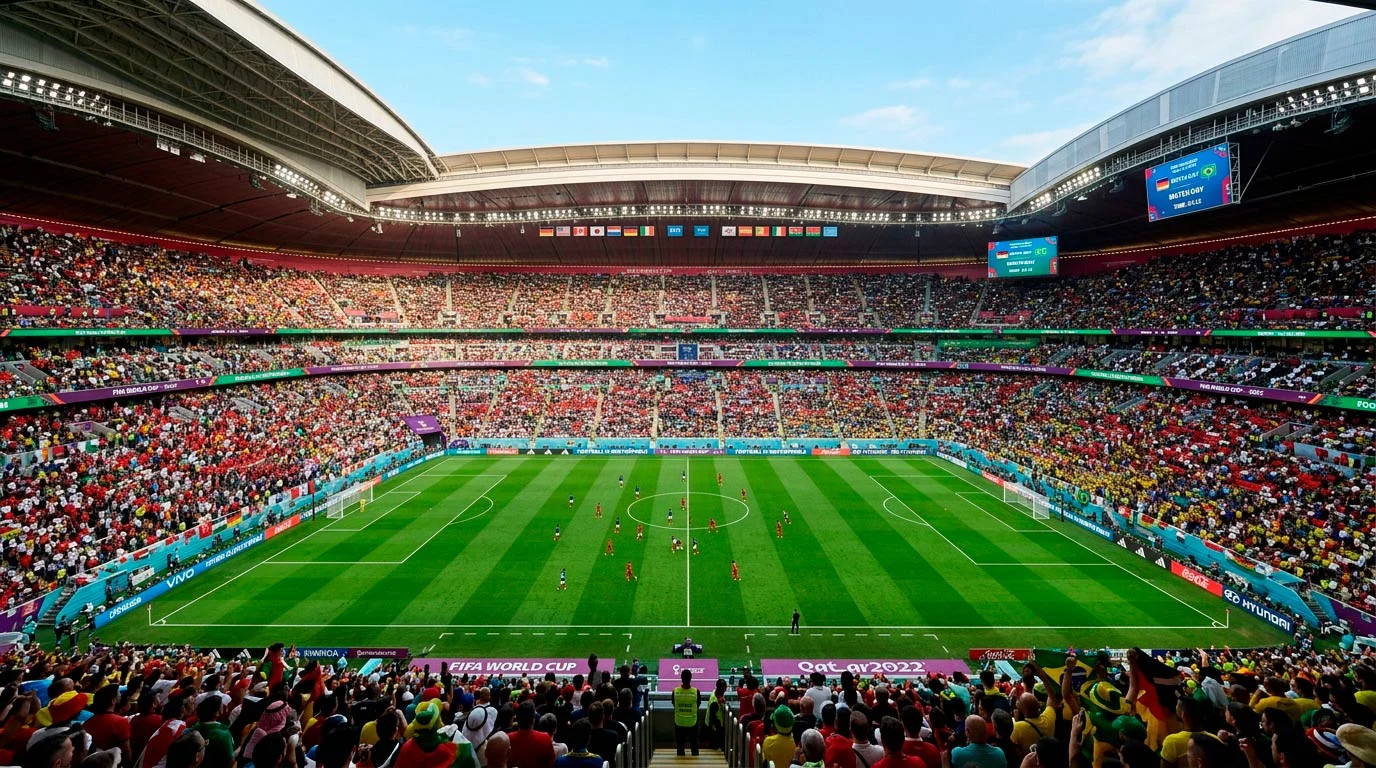
The expansion changes the mathematics of the tournament in ways that most casual bettors overlook. Under the old 32-team format, a group-stage favourite needed to survive three matches against three opponents. Now, with the same three-match group stage but a wider net for advancement — 32 out of 48 teams progress, meaning two-thirds of the field survives — the pressure dynamics shift dramatically. A traditional powerhouse drawn against weaker opposition in the group stage faces near-certain advancement, which suppresses outright group-winner odds and pushes value into other markets. Meanwhile, the introduction of third-place qualification creates an entirely new betting dimension: a team can lose two of three group matches and still reach the knockout round if results elsewhere cooperate.
For punters in New Zealand, this format carries a specific silver lining. The All Whites, drawn into Group G, do not need to finish in the top two to advance. A realistic third-place finish — one that would have meant elimination in every previous World Cup — might be enough to send them into the round of 32. That single structural change turns what would have been a sentimental long shot into a genuinely actionable betting proposition.
Three host nations also mean three distinct playing environments. Matches in Mexico City at the Estadio Azteca sit at 2,200 metres above sea level — altitude that has historically punished European and South American teams unaccustomed to thin air. Games in Vancouver and Seattle offer cooler Pacific Northwest conditions. And the sprawling American venues from Los Angeles to Miami introduce variables ranging from extreme heat and humidity to air-conditioned indoor stadiums. I have spent nine years building tournament models, and I can tell you that venue data has never mattered more than it will in 2026. The complete betting guide breaks down how each of these factors feeds into match-level strategy.
The expansion also means more minnows, more mismatches, and more unpredictable results in the early rounds — exactly the conditions that generate mispriced odds. When Haiti face Brazil in Group C, or Curaçao meet Germany in Group E, the market will price those outcomes with near-certainty. But group dynamics across three matchdays create second-order effects: a dead rubber in the final round, a team already qualified resting key players, a desperate underdog throwing everything forward. Those are the cracks where smart money finds daylight.
The format tells us what is possible. But for New Zealand, the story is far more personal than structure.
The All Whites Are Back — A Nation Holds Its Breath
Sixteen years. That is how long New Zealand has waited to hear the words "the All Whites are going to the World Cup." The last time this country sent a football team to the biggest stage, Barack Obama had just taken office, the iPhone 3GS was cutting-edge technology, and a group of players nobody outside Oceania had heard of went to South Africa and left unbeaten — three draws in three matches, including a 1-1 result against the reigning champions Italy. It remains one of the most extraordinary underdog stories the tournament has ever produced. And now, after 5,840 days of waiting, New Zealand is back.
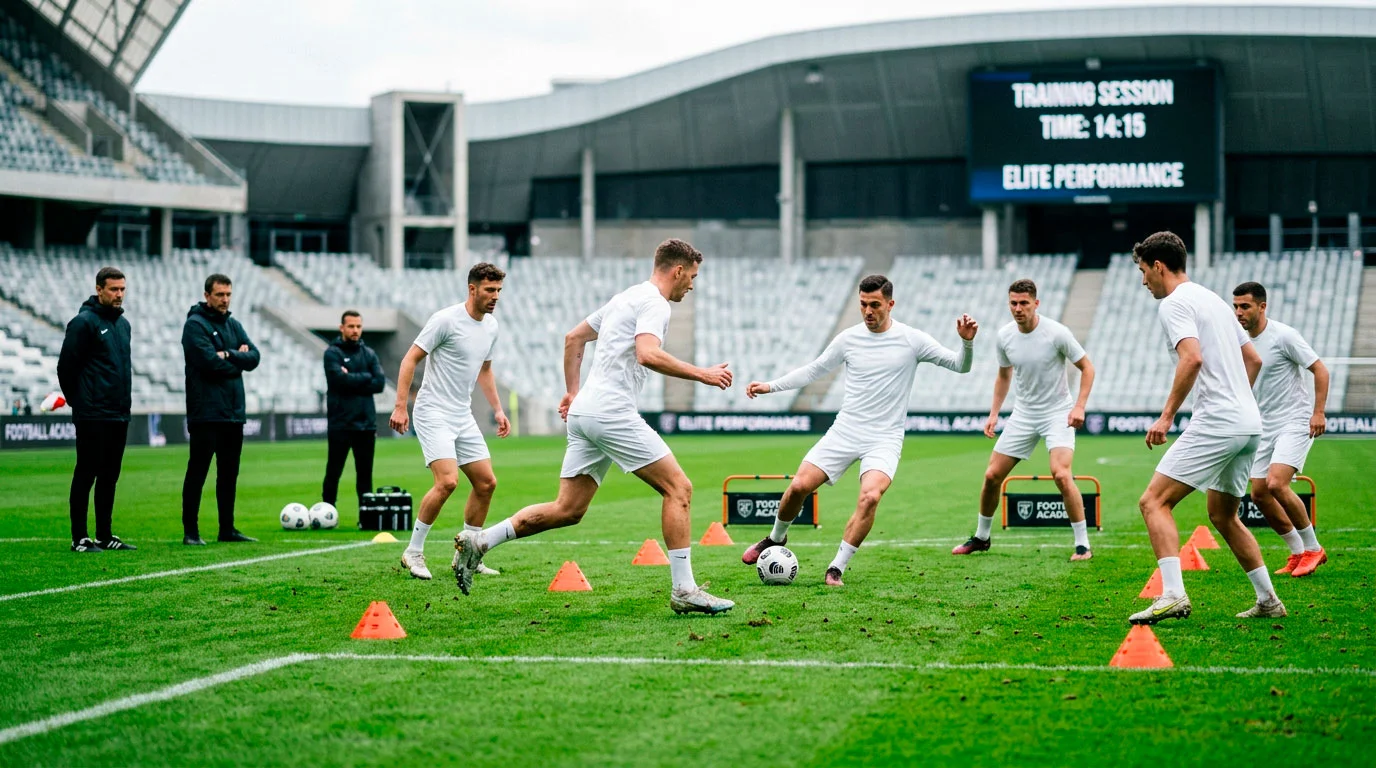
The qualification campaign through the OFC was as dominant as it was expected to be. Five matches, five victories, a goal difference of plus 28, and a squad that looked several levels above regional competition. But those numbers do not tell the full story. This is a fundamentally different All Whites side from the one that drew with Italy. The core of this squad plays professional football in Europe — the kind of weekly exposure to high-level competition that the 2010 team simply did not have. That European experience matters enormously when the task is not just qualifying through Oceania but competing against Belgium, Egypt and Iran on the world stage.
Group G sets up a fascinating three-act drama for Kiwi punters, and I have been studying these matchups since the draw was announced.
Match 1: Iran vs New Zealand
SoFi Stadium, Los Angeles — 15 June 2026
16 June, 13:00 NZT | 21:00 ET
Match 2: New Zealand vs Egypt
BC Place, Vancouver — 21 June 2026
22 June, 13:00 NZT | 21:00 ET
Match 3: New Zealand vs Belgium
BC Place, Vancouver — 26 June 2026
27 June, 15:00 NZT | 23:00 ET
The first match against Iran — if Iran participate, which remains uncertain due to the ongoing geopolitical situation — takes place at SoFi Stadium in Los Angeles. It is, on paper, the most winnable fixture for the All Whites. Iran's sports ministry has signalled reluctance to send the team to matches on American soil, and the Iranian Football Federation's position has shifted repeatedly since the conflict escalated in late February 2026. FIFA rejected Iran's request to move their Group G fixtures to Mexico. If Iran withdraw or are replaced — with the UAE or Iraq as likely substitutes — the calculus for New Zealand improves further. A replacement team arriving with minimal preparation time and no tournament momentum is a gift for an underdog looking to steal points early.
The second match against Egypt in Vancouver is the contest that defines New Zealand's tournament. Egypt bring Mohamed Salah, one of the most dangerous forwards in world football, and a squad that qualified comfortably through African competition. But Egypt's World Cup record outside 2018 is thin, and the Pharaohs have historically struggled in the opening phase of tournaments. Vancouver, with its mild June weather and a Pacific-adjacent location closer to New Zealand than any other World Cup venue, could feel almost like neutral ground. This is the match where the All Whites need a result — a draw here combined with a win in the opener would put third-place qualification firmly within reach.
The final group match against Belgium is the glamour fixture and the hardest ask. Belgium's golden generation — Kevin De Bruyne, Romelu Lukaku — may be entering their final international tournament, and a team with that kind of individual quality rarely slips against an opponent they are expected to beat comfortably. But there is a scenario, and it is not an outlandish one, where Belgium have already secured top spot in the group by matchday three. If that happens, squad rotation becomes likely, and the match transforms from a mismatch into something far more competitive.
The All Whites' realistic path to the round of 32 runs through a win in match one, a competitive result against Egypt, and the hope that third-place points are enough. It is not fantasy — it is mathematics, and the expanded format makes it genuinely achievable. For a deeper look at squad composition, tactics and group dynamics, the full All Whites preview covers every angle.
Every one of those three matches kicks off during New Zealand daytime — 13:00 or 15:00 NZT. No alarm clocks at 3 a.m., no bleary-eyed streaming on a phone at work. For the first time in a generation, New Zealanders can watch their team at a World Cup in prime afternoon viewing. The pubs will be full, the TAB queues will be long, and the atmosphere will feel like something this country has not experienced since that night in Polokwane when Winston Reid's header almost stole a point against Paraguay. The difference now is that the stakes are higher, the squad is better, and the format offers more room to dream.
But the All Whites are just one thread in a tapestry of forty-eight stories. Every group has its own intrigue.
Twelve Groups, Forty-Eight Teams — Stories Waiting to Unfold
The moment the draw balls came out and settled into their slots, I started building my group-stage model. Twelve groups, each with its own narrative tension, its own hierarchy of favourites and underdogs, and its own set of betting opportunities that will not exist once the knockout rounds begin. This is the phase of the World Cup where knowledge pays the highest dividend — where understanding dynamics, motivation and form matters more than raw talent. Let me walk you through the landscape, starting with the group that matters most to anyone reading this from New Zealand.
Group G — The All Whites' Theatre
| Team | Confederation | FIFA Ranking | Key Player |
|---|---|---|---|
| Belgium | UEFA | Top 10 | Kevin De Bruyne |
| Egypt | CAF | 30s | Mohamed Salah |
| Iran* | AFC | 20s | Mehdi Taremi |
| New Zealand | OFC | 90s | Chris Wood |
*Iran's participation remains unresolved as of late March 2026. If Iran withdraw, the most likely replacements are the UAE or Iraq (pending the intercontinental playoff result on 31 March).
Belgium are the clear favourites here, but their golden generation is aging. Egypt have star power through Salah but limited World Cup pedigree. And New Zealand, as I have outlined, have a realistic shot at a third-place finish that could be enough to advance. This is not a group of death — it is a group of opportunity, and that distinction matters enormously for bettors.
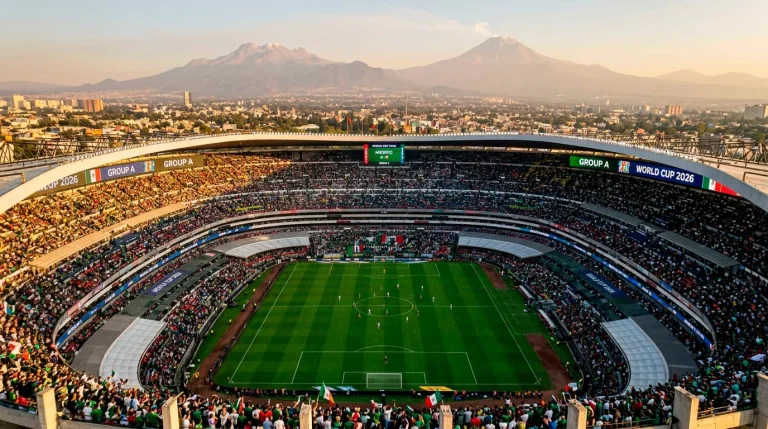
World Cup 2026 Group A – Mexico Open the Show on Home Soil
Every World Cup needs a curtain-raiser that sets the tone for weeks of football ahead,...
-

World Cup 2026 Group C – Brazil, Morocco, Scotland and Haiti’s Fairytale
Four years ago in Qatar, Morocco stunned Brazil...
-
World Cup 2026 Group G – Belgium, Iran, Egypt and the All Whites’ Destiny
I remember exactly where I was when the...
-

World Cup 2026 Group L – England, Croatia, Panama and Ghana
England and Croatia have unfinished business. In the...
The Groups of Death
If Group G is about opportunity, Group L is about carnage. England and Croatia share a group again — a pairing that carries the emotional weight of 2018, when Croatia knocked England out in the semi-finals. Add Panama and Ghana, two teams with nothing to lose and the athleticism to cause problems, and you have a group where every point will feel hard-earned. England start as heavy favourites, but Croatia's tournament pedigree — a final in 2018, a semi-final in 2022 — makes them dangerous in every fixture.
Group C is another bloodbath in waiting. Brazil, Morocco, Scotland and debutants Haiti create a fascinating mix of pedigree and ambition. Morocco reached the semi-finals in 2022 and have the tactical sophistication to trouble Brazil. Scotland bring decades of World Cup heartbreak and a support base that will turn Vancouver and Seattle into Tartan Army territory. And Haiti, making their first World Cup appearance, carry the hopes of a nation that has waited generations for this moment. For betting purposes, the Morocco-Brazil fixture on matchday two is the key — the result there likely determines who tops the group and who scrambles for survival.
The Clearer Paths
Not every group carries the same level of jeopardy. Group E — Germany, Côte d'Ivoire, Ecuador and Curaçao — offers Germany a relatively comfortable route to the knockout round, though the African champions from 2023 should not be dismissed. Group H has Spain paired with Uruguay, Saudi Arabia and Cabo Verde — the Euro 2024 champions are prohibitive favourites, but Uruguay's quality makes second place a genuine contest. Group J presents Argentina with Algeria, Austria and Jordan, a draw that has defending champions written into the round of 32 before a ball is kicked.
The groups with unresolved UEFA and intercontinental playoff spots — A, B, D, F and others — add another layer of uncertainty. As of late March 2026, those playoffs are still being decided, meaning bookmakers are pricing certain groups with incomplete information. If you have strong views on the playoff outcomes, acting early on group winner markets could carry outsized value. For example, if Italy emerge from UEFA Playoff Path A and slot into Group B alongside Canada, Switzerland and Qatar, that group's complexity increases substantially — Italy at a World Cup are never a straightforward proposition.
Third-Place Qualification — A New Market
The eight best third-placed teams qualify for the round of 32. This is entirely new territory for the World Cup, and it creates a market that bookmakers are still learning how to price. In the European Championship, which has used this format since 2016, the pattern is consistent: teams from relatively easy groups accumulate more points in third place than teams from groups of death. A third-placed team in Group E with four points is almost certainly through, while a third-placed team in Group L with three points faces an anxious wait. Understanding this dynamic — that group difficulty inversely correlates with third-place qualification chances — is a structural edge that the market has not fully absorbed.
The full group-by-group analysis covers every fixture, every rivalry and every angle across all twelve groups. What follows here is the view from 10,000 feet — the patterns and themes that matter for building a tournament-long betting strategy.
Understanding the groups is one thing. Placing a legal bet from New Zealand is another conversation entirely.
Betting on the World Cup from New Zealand
A punter in London can open six different apps and compare odds across every one of them before placing a World Cup bet. A punter in Auckland cannot. That is the single most important fact about World Cup 2026 betting from New Zealand, and everything else flows from it. Since the amendments to the Gambling Act 2003 took effect on 28 June 2025, offshore bookmakers are prohibited from accepting bets from anyone in New Zealand. TAB NZ — operated under a 25-year contract by Entain — holds the exclusive legal monopoly on sports betting in this country. There are no alternatives, no grey-market workarounds that carry legal protection, and no sign that the regulatory framework will change before kickoff.
Legal Notice: TAB NZ is the only operator legally permitted to accept sports bets from persons in New Zealand. Placing bets with offshore or unlicensed operators may expose you to legal risk under the Gambling Act 2003 as amended. This guide is for informational purposes and does not constitute financial advice.
What does this mean in practice? First, all your World Cup betting will use decimal odds — the standard format across Australasia. Decimal odds tell you the total return per dollar staked, including your original stake. If the All Whites are priced at 4.50 to beat Iran, a $10 bet returns $45 if they win — $35 profit plus your $10 back. The maths is simpler than fractional or American odds, and if you have ever placed a bet on rugby or racing through TAB, you already know how it works.
Second, the monopoly structure affects pricing. Without competitive pressure from rival operators, TAB NZ's margins on football markets can be wider than what you would find in a competitive European market. I have tracked football odds across multiple platforms for years, and the takeout on a TAB NZ football match market is typically higher than what a UK or Australian punter would see. This does not make TAB NZ a bad platform — it is well-regulated, deposits and withdrawals in NZD are seamless, and the responsible gambling tools (self-exclusion, deposit limits, reality checks) are robust. But it does mean that finding value requires extra discipline. You need to assess implied probabilities carefully and only act when you believe the market has genuinely mispriced an outcome, not simply when an odds number looks attractive in isolation.
Third, timing matters. TAB NZ will open World Cup outright markets well before the tournament begins, but match-level odds typically sharpen as kickoff approaches. If you have a strong pre-tournament view — say, on a group winner or an outright dark horse — acting early often captures better prices than waiting for the market to settle into its final position. Conversely, for individual match bets, patience pays: late team news, fitness updates and weather conditions can all shift the line in the final 24 hours.
The dedicated NZ betting guide walks through the full legal framework, TAB NZ's available markets for the World Cup, and practical steps for placing your first football bet on the platform. What matters here, on this hub page, is the principle: one operator, decimal odds, NZD, and margins that demand sharper analysis from anyone looking to bet with an edge rather than simply picking a name and hoping.
New Zealand's gambling culture is deep — TAB has been part of Kiwi life since the 1950s, and per-capita spending on gambling is among the highest in the developed world. The World Cup is about to channel that energy into football markets at a scale this country has never experienced. Being informed before the rush starts is not optional. It is your first edge.
With the rules of the NZ betting landscape clear, the question shifts to who the market thinks will win it all.
Who Lifts the Trophy? Early Odds and the Favourites' Stories
Every World Cup starts with the same question, and the market answers it with cold decimal numbers. But behind every price sits a narrative — a story of momentum, squad depth, tactical identity and historical weight that no algorithm fully captures. I have been reading outright World Cup odds for nearly a decade, and the 2026 market tells a story of three tiers: the elite favourites, the dangerous contenders, and everyone else scrambling for a footnote. Let me take you through it.
| Team | Approximate Outright Odds | Implied Probability |
|---|---|---|
| Argentina | 5.00 | ~20% |
| France | 5.50 | ~18% |
| Brazil | 7.00 | ~14% |
| England | 8.00 | ~12.5% |
| Spain | 9.00 | ~11% |
| Germany | 13.00 | ~7.7% |
| Portugal | 15.00 | ~6.7% |
| Netherlands | 17.00 | ~5.9% |
| Belgium | 21.00 | ~4.8% |
| Uruguay | 26.00 | ~3.8% |
Argentina sit at the top of the market, and the reasoning is straightforward: defending champions, a squad that blends the genius of Lionel Messi — if he features, and every indication suggests he wants one last World Cup at Inter Miami's home country — with a fearsome next generation led by Julián Álvarez and Enzo Fernández. Lionel Scaloni's side have not lost a competitive match since the 2022 final-round group stage stumble against Saudi Arabia. Their draw in Group J (Algeria, Austria, Jordan) is comfortable. But the price — around 5.00 — reflects this. There is limited value in backing the obvious favourite at a tournament with 48 teams and seven knockout rounds between the group stage and the trophy.
France are the market's second pick, and they carry their own narrative burden. Runners-up in 2022, champions in 2018, and armed with a squad so deep that Kylian Mbappé, Aurélien Tchouaméni and William Saliba would be the spine of almost any other national team in the draw. France's challenge is not talent — it is cohesion. Didier Deschamps has managed egos and expectations through two World Cup cycles, and if he remains in charge through 2026 (his contract situation has been the subject of persistent speculation), the institutional knowledge alone is worth a goal advantage in any knockout tie.
Brazil at 7.00 represent the most intriguing proposition in the top tier. Twenty-four years without a World Cup title is an eternity for a nation that has won five. The emergence of Endrick, the continued brilliance of Vinícius Júnior, and a tactical reset under the current coaching staff have produced a team that looks closer to a complete package than anything Brazil have fielded since the Ronaldinho era. Group C, with Morocco and Scotland as the principal threats, is navigable. And the implied probability at 7.00 — roughly 14% — underestimates, in my view, the combination of talent and hunger that drives this squad.
England are the perennial "this is their year" candidate, and at 8.00 the market clearly thinks 2026 could be it. Jude Bellingham, Bukayo Saka and Phil Foden form a creative triangle that any defence in the tournament should fear. But England's knockout-round record remains a source of anxiety: semi-final exits in 2018 and the 2022 quarter-final loss to France, plus the Euro 2024 final defeat, suggest a pattern of falling just short at the decisive moment. The question is not whether England have the squad — they do — but whether they have the composure to convert quality into silverware when the margins are thinnest.
Spain, the reigning European champions, may be the best value in the top five. A squad built around teenagers and early-twenties players — Lamine Yamal, Pedri, Nico Williams — who already won a major tournament together at Euro 2024. Their pressing game under Luis de la Fuente is relentless, their squad depth remarkable for such a young team, and their Group H draw (Uruguay, Saudi Arabia, Cabo Verde) is demanding but winnable. At around 9.00, Spain's price reflects lingering scepticism about their World Cup pedigree since 2010. That scepticism looks mispriced given the evidence from the European Championship.
Further down the market, Germany at 13.00 offer a rebuild narrative, Portugal at 15.00 bring Cristiano Ronaldo's last tournament dance, and the Netherlands at 17.00 carry the same blend of quality and inconsistency that has defined Dutch football for generations. Belgium, at 21.00 and aging rapidly, feel overpriced for a team whose best window has passed. Uruguay, compact and street-smart under Marcelo Bielsa, are the kind of team that punches above its weight in knockout football — at 26.00, they are worth a second look on the each-way market.
The full odds and predictions page dives deeper into every contender, every dark horse, and the individual markets — Golden Boot, group winners, specials — that offer the sharpest edges for New Zealand bettors. Here, the headline is simple: Argentina lead the market, but this is the most open World Cup in a generation, and the expanded format ensures that any team reaching the quarter-finals has a realistic path to the trophy.
The teams and their odds are one half of the equation. The other half is where these stories will physically unfold.
Sixteen Stadiums, Three Countries — Where History Will Be Made
When I first saw the full venue list, I pulled up a map and measured the distances. From Estadio Azteca in Mexico City — the cathedral, the only ground that has hosted two World Cup finals — to Gillette Stadium outside Boston, you are looking at roughly 3,700 kilometres as the crow flies. This tournament stretches across an entire continent, and that geographic reality is not just a logistical footnote. It is a variable that feeds directly into match outcomes and, therefore, into your betting decisions.
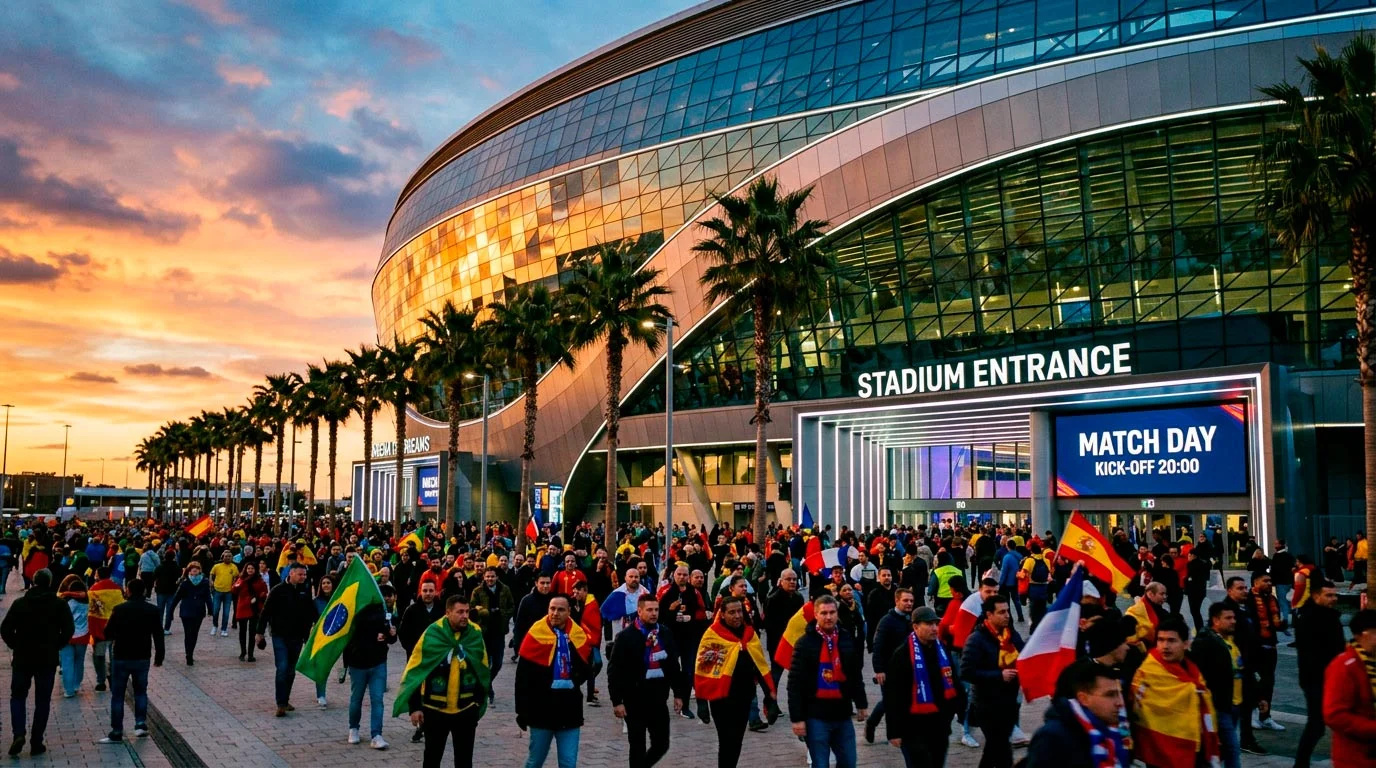
The United States hosts the lion's share with eleven stadiums. MetLife Stadium in East Rutherford, New Jersey, gets the final on 19 July — an 82,000-seat colossus that will host the defining moment of the tournament. SoFi Stadium in Los Angeles, the indoor venue where the All Whites open their campaign against Iran, is one of the most technologically advanced stadiums on the planet, with a controlled climate that removes weather as a variable. Hard Rock Stadium in Miami sits in subtropical humidity that will test any team with a European-based squad playing in June. AT&T Stadium in Dallas and NRG Stadium in Houston are both retractable-roof venues in Texas, where the summer heat outside can exceed 40 degrees Celsius but the playing surface sits in air-conditioned comfort.
Estadio Azteca will become the first stadium in history to host matches at three separate World Cups — 1970, 1986 and 2026. The ghosts of Pelé's Brazil and Maradona's Argentina still haunt those terraces.
Mexico contributes three venues: the Azteca for the opening match (Mexico vs South Africa on 11 June), Estadio BBVA in Monterrey, and Estadio Akron in Guadalajara. Canada provides two — BMO Field in Toronto and BC Place in Vancouver, the retractable-roof stadium where the All Whites will play their second and third group matches. For Kiwi fans considering the trip, Vancouver is the closest World Cup venue to New Zealand, with direct flights from Auckland clocking around twelve hours. It is not a short journey, but compared to the 24-hour trek to New Jersey, it is the accessible option.
BC Place in Vancouver sits just 8,800 km from Auckland — closer to New Zealand than any other 2026 venue. Two of the All Whites' three group matches take place there, giving travelling Kiwi supporters a genuine base for the tournament.
For betting, the stadium variable matters in specific ways. Indoor and retractable-roof venues neutralise weather advantages, making form and quality the dominant factors. Open-air venues in Miami, Houston and Dallas introduce heat stress — historically, teams from northern Europe underperform in high-heat conditions during the early rounds. The altitude factor at the Azteca is well-documented: visiting teams at elevation concede more goals in the second half as fatigue accelerates. These are not abstractions. They are quantifiable edges that feed into match-level models, and I factor them into every prediction I publish on this site.
You know the teams, the groups, the venues and the odds. Now the question is how to turn all of that into a coherent betting strategy.
The Punter's Playbook — Smarter Bets for the World Cup
A mate of mine lost his entire World Cup bankroll in the first four days of the 2022 tournament. He backed Argentina to beat Saudi Arabia, Germany to beat Japan, and Belgium to beat Morocco — three "certainties" that all fell over within 72 hours. His mistake was not the picks themselves. His mistake was staking as though the outcome was already decided. World Cup betting is a marathon that spans 39 days and 104 matches, and the single most important skill you can develop is the discipline to survive the opening chaos with enough bankroll to exploit the opportunities that emerge as the tournament unfolds.
The starting point is a staking plan. I use a flat-stake approach for tournament betting — one unit per bet, every bet, regardless of how confident I feel. A unit should represent no more than 2-3% of your total World Cup bankroll. If you set aside $500 for the tournament, that means $10-15 per bet. It sounds conservative, and it is. Conservative is what keeps you in the game when Japan beat Germany again.
The second principle is understanding the distinction between betting markets and choosing the right one for each situation. The match result market (1X2) is the simplest and most popular, but it is also where the bookmaker's margin tends to be widest on heavy favourites. When Argentina face Jordan in Group J, the match result price on Argentina will carry a built-in tax because recreational bettors pile into the favourite. The value in that match more likely sits in the over/under goals market, or in the Asian handicap, where the line work is more precise and the margin is thinner.
For the group stage specifically, three market types deserve the most attention from World Cup bettors. First, group winner bets — priced before the tournament begins, these offer the chance to lock in a view on a group's outcome before results narrow the field. Second, match-level over/under markets during the third matchday, when dead rubbers between eliminated or already-qualified teams historically produce higher-scoring games as defensive discipline drops. Third, the third-place qualification market, which is new to the World Cup format and where bookmaker models are least refined — this is where structural knowledge of how the Euro 2016 and Euro 2020 third-place tables played out gives you a genuine informational edge.
Multis — what the rest of the world calls parlays or accumulators — are enormously popular in New Zealand. TAB NZ's interface encourages building multi-leg bets, and the theoretical payouts are seductive. A four-leg multi at average odds of 2.00 per leg pays 16.00, turning a $10 bet into $160. But the mathematics are unforgiving: the probability of landing all four legs, even if each individual leg is a slight favourite, drops below 10%. I am not going to tell you to never build a multi — I build them myself for entertainment on big tournament days. But I separate my multi bets from my serious analytical bets, and the multi stake comes from a discretionary "fun money" allocation, not from my core bankroll.
Responsible Gambling: Gambling should be entertaining, not stressful. If betting stops being fun, or if you find yourself chasing losses, contact the Gambling Helpline NZ (0800 654 655) or use the self-exclusion tools available on TAB NZ. Set deposit limits before the tournament starts, not after the first bad weekend.
Value betting — the practice of identifying odds that overestimate or underestimate the true probability of an outcome — is the core of profitable long-term punting. The concept is simple: if you believe the All Whites have a 30% chance of beating Iran but the market prices them at 4.50 (implied probability 22%), that is a value bet regardless of whether New Zealand actually win the match. Over a tournament of 104 matches, consistently finding even small edges like this compounds into meaningful returns. The complete betting guide covers each market type in detail, with worked examples using World Cup scenarios.
The 2026 World Cup is the longest, largest and most complex edition of the tournament in history. That complexity is your friend if you prepare for it, and your enemy if you approach it casually. Start with a plan, stake within it, and treat every match as a data point, not a dice roll.
Frequently Asked Questions
When does the 2026 World Cup start and finish?
The tournament runs from 11 June to 19 July 2026. The opening match — Mexico vs South Africa — takes place at Estadio Azteca in Mexico City. The final is at MetLife Stadium in East Rutherford, New Jersey. For New Zealand viewers, all matches fall during convenient daytime or early evening hours due to the NZT-to-ET time difference of roughly 17 hours.
How many teams are in the 2026 World Cup?
Forty-eight teams compete in the 2026 edition, up from 32 at the previous four tournaments. The 48 teams are split into 12 groups of 4. The top 2 from each group advance automatically, and the 8 best third-placed teams also qualify for the knockout round, which begins at the round of 32 — a new stage in World Cup history.
Can I legally bet on the World Cup from New Zealand?
Yes. TAB NZ is the sole legal operator for sports betting in New Zealand, following the June 2025 amendments to the Gambling Act 2003. All World Cup bets must be placed through TAB NZ. Offshore operators are prohibited from accepting bets from persons in New Zealand. TAB NZ uses decimal odds and accepts deposits in NZD.
Are the All Whites in the 2026 World Cup?
Yes. New Zealand qualified as OFC champions, winning all five qualification matches with a goal difference of plus 28. The All Whites are drawn in Group G with Belgium, Egypt and Iran, and play their matches at SoFi Stadium (Los Angeles) and BC Place (Vancouver) between 15 and 26 June 2026. It is their first World Cup appearance since 2010.
What are the All Whites' chances of advancing past the group stage?
The expanded format gives the All Whites a realistic path. Under the new structure, the 8 best third-placed teams advance alongside the top 2 from each group. New Zealand need not finish in the top two — a competitive third-place finish with enough points could be sufficient. Their opening match against Iran (whose participation is uncertain) offers the best chance to collect early points, and a result against Egypt in match two could secure a third-place position strong enough to qualify.
Who are the favourites to win the 2026 World Cup?
Argentina, the defending champions, lead the outright market at approximately 5.00 in decimal odds. France are close behind at around 5.50, followed by Brazil (7.00), England (8.00) and Spain (9.00). The expanded 48-team format and the additional knockout round make this the most open World Cup in modern history, with genuine dark horse candidates including Morocco, Japan and Colombia further down the betting.
