
 Available in US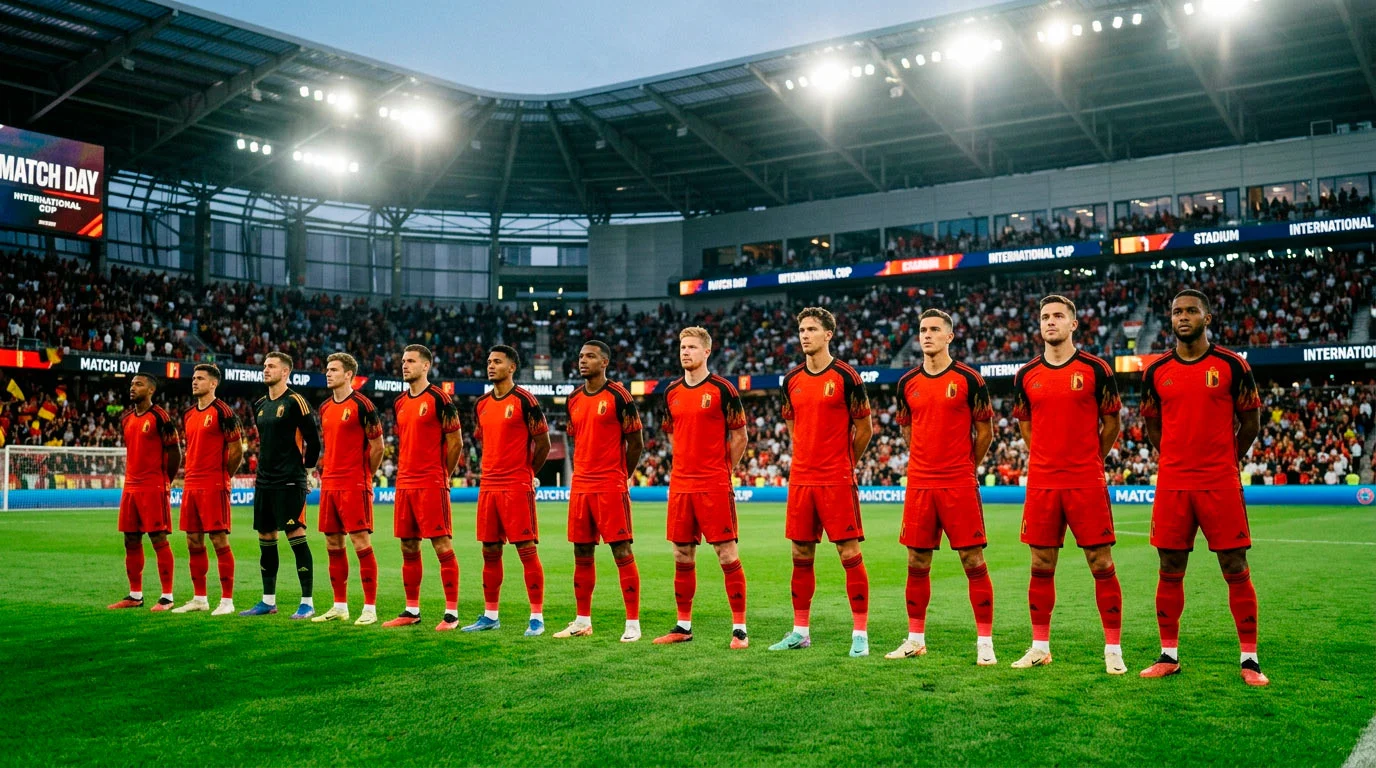
Third place at the 2018 World Cup. Number one in the FIFA rankings for years. A generation of players – De Bruyne, Lukaku, Courtois, Hazard – that any nation on earth would have been proud to call their own. And yet Belgium’s golden generation retires without a major trophy. No World Cup. No European Championship. Nothing but a bronze medal and a collection of “what if” moments that grow more painful with each passing tournament. Belgium at the World Cup 2026 is the last chapter of that story – or the first chapter of a new one. For Kiwi fans, it is something more immediate: Belgium are the team standing between the All Whites and a realistic shot at qualifying from Group G, and understanding them is essential for anyone placing a bet on New Zealand’s World Cup campaign.
The qualifying run was uneven, and that unevenness tells you everything about where Belgium stand in 2026. There were convincing home wins where the remaining quality of the squad overwhelmed lesser opponents. There were away results that raised eyebrows – narrow victories and draws against teams Belgium would have dismantled five years ago. The overall picture was of a team that qualified on autopilot but without the intensity or dominance that characterised their peak years.
I tracked Belgium’s progressive passing data through qualifiers, and the drop-off from their 2018 levels was significant. The midfield no longer controls matches with the authority it once did. The pressing is less coordinated. The transitions from defence to attack, which were devastatingly quick under Roberto Martínez, have slowed as the players who executed them have aged. These are the kinds of data points that do not show up in the results column but matter enormously when Belgium face opponents of genuine quality – opponents like Egypt and potentially even the All Whites.
The defensive record during qualifying was solid enough to satisfy the statistical requirement but masked individual errors that would be punished at World Cup level. Belgium’s centre-backs were caught out of position on several occasions during the campaign, and the recovery speed that once compensated for those lapses has diminished with age. For bettors, this translates into a team that will likely keep clean sheets against the weakest group-stage opponents but is vulnerable to conceding against organised sides that can create even limited opportunities.
Kevin De Bruyne will be 35 at the World Cup, and the question of his form and fitness will define Belgium’s campaign more than any other factor. When De Bruyne is at full capacity, Belgium’s attacking play has a clarity and purpose that elevates the entire team. His passing range, his vision, his ability to deliver decisive moments in tight matches – these qualities are irreplaceable in the Belgian setup. But the injuries have accumulated over the last two seasons, and his ability to sustain peak performance across three group matches and potentially two or three knockout fixtures is uncertain. If De Bruyne is fit and sharp, Belgium are genuine Group G favourites. If he is managing an injury or below par, the gap between Belgium and the other teams in the group narrows significantly.
Romelu Lukaku remains the focal point of Belgium’s attack, and his goalscoring record at international level is extraordinary – he is Belgium’s all-time leading scorer by a margin that may never be surpassed. At 33, Lukaku has adapted his game from explosive pace to intelligent movement and clinical finishing inside the box. He will not outrun centre-backs anymore, but he will outthink them, and his physical presence in the air gives Belgium a set-piece threat that no opponent can ignore. Against the All Whites in particular, Lukaku’s aerial ability against New Zealand’s defensive line could be the decisive factor in the Group G showdown.
The transition to the next generation has produced mixed results. Several younger players have broken into the squad and shown promise at club level, but the international experience gap between them and the golden generation is vast. A 22-year-old midfielder making his World Cup debut will not have the composure under pressure that De Bruyne has accumulated over three consecutive tournaments. The coaching staff must manage this experience gap carefully – leaning on the senior players for leadership while giving the younger ones enough responsibility to grow without being overwhelmed.
The goalkeeping position is a strength. Thibaut Courtois, when available, is among the best keepers in the world – his shot-stopping, his command of the box and his distribution all rank at the highest level. The backup options are capable but represent a clear step down, and an injury to Courtois would significantly weaken Belgium’s chances of topping Group G.
Group G pairs Belgium with Egypt, Iran (or their replacement) and New Zealand. On paper, Belgium are the strongest team. In practice, the group is tighter than the seedings suggest. Egypt have Mohamed Salah and a defensive organisation that has frustrated better teams than Belgium in recent years. Iran, if they participate, bring physical intensity and a familiarity with high-pressure international fixtures. And the All Whites – underdogs by any measure – have the defensive discipline and set-piece quality to make any single match competitive.
Belgium’s path to topping the group runs through the Egypt match, which I expect to be the decisive fixture. Both teams will target the other’s weaknesses: Belgium will try to exploit Egypt’s defensive high line with De Bruyne’s through balls, while Egypt will look to isolate Salah against Belgium’s ageing full-backs. The winner of this match will almost certainly finish first, and the loser will need results elsewhere to avoid a precarious third-place position.
The All Whites match on 27 June in Vancouver is the final group fixture for Belgium, and its significance will depend entirely on the results from matchdays one and two. If Belgium have already qualified, the coaching staff may rotate – resting De Bruyne and Lukaku ahead of the knockout rounds. If Belgium still need points, the All Whites will face a team playing with desperation, which is a very different proposition. For New Zealand punters, monitoring Belgium’s results in the first two matches is essential for assessing the value of bets on the third fixture.
The Iran situation adds a layer of uncertainty that affects everyone in the group. If Iran withdraw and a replacement team – likely the UAE or Iraq – enters with minimal preparation time, Group G becomes significantly easier for Belgium. A less cohesive replacement team would be expected to lose all three matches, effectively turning the group into a three-way contest where Belgium’s quality advantage over Egypt and New Zealand should tell.
Belgium’s outright odds to win the World Cup have drifted from the 12.00-15.00 range that characterised their peak years to 25.00-35.00 for 2026. The market is telling you that Belgium are no longer considered genuine title contenders, and I agree with that assessment. The squad has declined from its peak, the tactical sharpness has dulled, and the depth behind the first eleven is insufficient for a five-week tournament. Belgium could win a couple of knockout matches on a good day, but sustained excellence across seven games is beyond this squad.
Where Belgium’s odds do offer value is in the Group G markets. Belgium to top the group is priced around 1.70-1.90, which reflects their status as the strongest team but acknowledges the threat from Egypt. I think Belgium top the group slightly more often than that price implies – perhaps 55-60% of the time compared to the 53-59% the odds suggest – which makes it a marginal value bet rather than a strong one. The sharper play is Belgium to qualify from the group, which should be priced around 1.25-1.35 and offers near-certainty with a small return.
For individual matches, Belgium to beat the All Whites in the third group game is a market that requires context. If Belgium are already through, expect a rotated lineup at around 1.80-2.00 for a Belgium win. If Belgium still need points, the price will shorten to 1.40-1.50, and the value shifts to backing the team that needs the result. This is a market where patience – waiting until the first two matchdays have been played – is more profitable than backing early.
Belgium and New Zealand have rarely met on the football pitch. The head-to-head record is sparse, and the competitive history between the two nations is essentially non-existent at World Cup level. This absence of precedent is actually useful for analysis: it means we can focus on current form and squad quality rather than being distracted by historical patterns that may not apply to the 2026 context.
The matchup favours Belgium in every measurable category – individual quality, squad depth, tournament experience, tactical sophistication. But football matches are not decided by spreadsheets. New Zealand’s defensive structure, their set-piece threat and their willingness to accept limited possession and play on the counter create a specific challenge for Belgium that differs from the challenges posed by Egypt or Iran. Belgium’s centre-backs, who may struggle with pace at this stage of their careers, are better suited to defending against New Zealand’s direct style than against quick, mobile forwards. But Lukaku’s aerial presence against New Zealand’s defensive line is a mismatch that the All Whites will struggle to contain.
For Kiwi bettors, the Belgium match represents the toughest test in Group G but also the most predictable from a tactical standpoint. New Zealand know they will defend deep, they know Belgium will control possession, and they know the margins will be small. A bet on under 2.5 goals in this fixture is sound regardless of Belgium’s lineup, because the match dynamics favour a tight contest even if the quality gap is wide. The draw is also worth considering – Belgium may lack motivation if already qualified, and the All Whites will fight for every point with everything they have.
My approach to Belgium at the 2026 World Cup is straightforward: back them to qualify from the group, avoid the outright tournament market, and look for value in the match-level markets where the specific context of each fixture creates pricing opportunities.
Belgium to qualify from Group G is the safest bet in the group. Even with an ageing squad, their quality advantage over Egypt and New Zealand is sufficient to guarantee at least a third-place finish, and the expanded format means third place with a decent points tally is enough to progress. This is a high-probability, low-return bet that works as part of a multi rather than a standalone wager.
The individual match markets offer more interesting opportunities. Belgium to win the opening match against Iran or their replacement should be priced short, but the margin of victory is where the value lies – Belgium minus 1.5 goals at around 2.20-2.50 is worth considering against a disorganised or replacement opponent. Against Egypt, the both teams to score market at around 1.75-1.85 reflects the likelihood of a competitive contest where both sides have the attacking quality to find the net. Against New Zealand, as noted above, the under 2.5 goals market is the play.
De Bruyne in the assist markets – if TAB NZ offers them – is a bet I would make for every Belgium group match. His passing range and set-piece delivery create assist opportunities in every fixture, and the prices on assists tend to be more generous than goalscorer markets because assists are less visible to casual bettors. Two or three assists across the group stage is a realistic target for a player of his quality, even at reduced physical capacity.
Belgium at the World Cup 2026 is a team caught between eras. The golden generation’s brilliance is fading but not yet extinguished. The next generation shows promise but lacks the tournament hardening that only experience can provide. The result is a squad that is good enough to top Group G and reach the round of 32 but unlikely to go much further unless De Bruyne produces one of those transcendent tournament performances that elevate an entire team.
For the All Whites and their supporters, Belgium represent the ceiling of Group G – the opponent that New Zealand cannot afford to underestimate but also should not fear. The golden generation’s last dance will be compelling television. Whether it ends with a trophy, a round of 16 exit, or a quiet group-stage farewell depends on the fitness of one midfielder, the composure of the next generation, and the unpredictable magic that World Cups produce every four years.
