
 Available in US
The 2026 World Cup is not just another tournament. It is the first with 48 teams, 104 matches spread across three countries, and a knockout bracket that starts at the round of 32 instead of 16. For those of us who have spent years building models around 32-team formats and group-stage permutations, the entire playbook needs rewriting. I have been doing exactly that since the draw was announced, and this guide is the result.
Whether you are placing your first World Cup bet through TAB NZ or you have been punting on international football for a decade, the expanded format changes everything. New markets have emerged. Old strategies no longer apply in the same way. The third-place qualification route alone creates an entirely fresh layer of betting complexity that did not exist at Qatar 2022. And with the All Whites heading to their first World Cup since 2010, New Zealand has a stake in this tournament that goes beyond mere spectator interest.
This World Cup 2026 betting guide walks through the format, the markets, the odds, the strategy, and the practical steps to place a bet legally from New Zealand. I have structured it as a journey — start at the top if you are new to World Cup betting, or skip to the section that answers the question on your mind right now.
In 1998, FIFA expanded the World Cup from 24 to 32 teams and the betting world barely flinched. The group stage still worked the same way — four teams, six matches, top two advance. Simple. The 2026 expansion is a different beast entirely, and I want to make sure you understand why before you place a single bet.
Forty-eight teams now fill 12 groups of four. That part sounds familiar. But here is where it diverges: the top two from each group advance, and then the eight best third-placed teams also go through. That gives us 32 teams in the knockout bracket — the same number that used to start the entire tournament. The group stage has become a qualifying round within a qualifying round, and for punters, that distinction matters enormously.
Think about what “eight best third-placed teams” actually means for a side like the All Whites. In a 32-team World Cup, finishing third in your group sent you home. Now, a team can lose to Belgium, draw with Egypt, and still have a realistic path to the round of 32 if their goal difference holds up against other third-placed finishers. The margin for error has widened, and the betting markets have not fully adjusted to that reality yet.
The tournament runs from 11 June to 19 July 2026 — 39 days, 104 matches, across 16 stadiums in the United States, Mexico, and Canada. The opening match takes place at Estadio Azteca in Mexico City, and the final is at MetLife Stadium in New Jersey. For Kiwi viewers, the time zones are actually favourable: most matches kick off between 13:00 and 15:00 NZST, which means you can watch live without setting an alarm for 3 a.m.
The sheer volume of matches creates opportunities that previous World Cups never offered. With 48 group-stage games happening in the first 12 days alone, there are windows where four matches overlap on the same day. Bookmakers have to price all of them, and when they are stretched thin, value appears in the margins. I saw this pattern at Euro 2024 during the group-stage rush, and I expect it to be amplified here.
From a structural standpoint, the knockout bracket introduces a round of 32 before the familiar round of 16, quarter-finals, semi-finals, and final. That extra knockout round means one more elimination match for every surviving team — one more opportunity for upsets, extra time, and penalty shootouts. Teams that peak early and conserve energy through the group stage will have a genuine edge, and that is something your betting strategy needs to account for.
The three host nations — the USA, Mexico, and Canada — all qualified automatically, and they are spread across different groups. Home advantage in a multi-nation World Cup is a complicated variable. The USA plays all three group matches on home soil, but Mexico’s group-stage matches are split between Azteca and American venues. Canada plays in Toronto and Vancouver. For stadium-specific research, understanding which teams play where and in front of which crowd matters more than simply ticking a “home team” box in your model.
One more structural point worth noting: FIFA has confirmed that the third-place match is gone. The semi-final losers go home, and the final is the last match of the tournament. That removes a historically meaningless fixture from the calendar and concentrates all the drama into the last three matches. For outright and semi-final betting, this changes the incentive structure — there is no consolation prize, which means semi-finals should be tighter and more cautious than in previous editions.
I placed my first World Cup bet in 2010 — a $20 match result punt on New Zealand to draw with Italy. It paid 4.50 on the decimal odds, and I have been hooked on tournament betting ever since. But the range of markets available today makes 2010 look like a corner dairy compared to a supermarket. Here is what you will find on TAB NZ when the World Cup opens.
The match result market is the foundation. You pick one of three outcomes: home win, draw, or away win. In World Cup group-stage matches, the draw is always in play because there are no extra time periods — the match ends at 90 minutes plus stoppage time. This is critical because draw prices in World Cup group matches tend to offer better value than in domestic leagues. At the 2022 World Cup, 12 of 48 group-stage matches ended level, a draw rate of 25%. With weaker teams now in the field, I expect even more draws in 2026, particularly in groups where a mid-tier side faces an underdog and neither can afford to lose.
Over/under goals is the market I spend the most time on during group stages. The standard line sits at 2.5 goals — you bet on whether the match will have three or more goals (over) or two or fewer (under). The first matchday of a World Cup historically runs low on goals. Teams are nervous, managers prioritise not losing, and the under tends to hit. By matchday three, when teams know exactly what they need, goals flow. That matchday-by-matchday rhythm is not a theory — it is a pattern backed by data from the last five World Cups, and it directly shapes how I allocate my stakes across the group stage.
Both teams to score is a simpler yes/no proposition. Will each side find the net at least once? In matches involving heavy favourites against World Cup debutants — think Brazil versus Haiti in Group C — the “no” side has value because Haiti’s primary objective will be damage limitation, not attacking flair. But in balanced groups where three teams are fighting for two automatic spots, BTTS “yes” tends to land more often because defensive caution gives way to desperation.
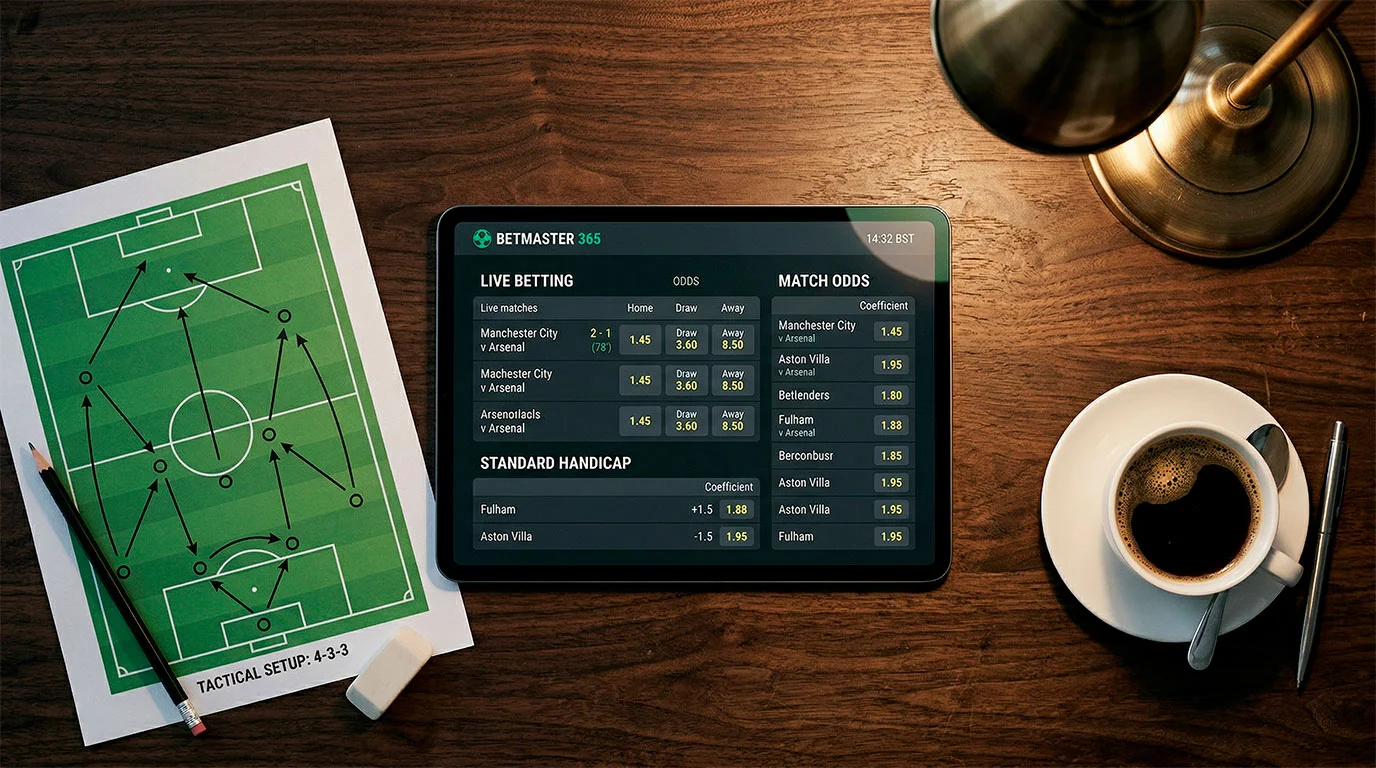
The Asian handicap eliminates the draw from the equation by giving one team a virtual head start. If you back New Zealand at +1.5 on the Asian handicap against Belgium, your bet wins as long as the All Whites lose by one goal or fewer, draw, or win outright. This market is essential for World Cup betting because it lets you back an underdog without needing them to pull off a full upset. In 2010, New Zealand drew all three group matches — an Asian handicap of +0.5 on the All Whites would have paid out every single time.
Outright winner is the glamour market. You pick one team to lift the trophy, and the bet runs for the entire tournament. Prices are available now, months before kickoff, and they will shift as squads are announced, injuries emerge, and form fluctuates. Argentina sit at the top of most books at around 5.00, with France and Brazil close behind. The key to outright betting is identifying value early and locking in a price before the market moves. Once the tournament starts, outright prices compress rapidly as the field shrinks. The full odds and predictions breakdown covers every contender’s pricing in detail.
Group winner bets ask you to pick which team finishes top of their group. This is a market where local knowledge pays off. Bookmakers set their prices based on FIFA rankings and general perception, but specifics — like the fact that the USA will play all three Group D matches on home soil while Australia adjusts to North American conditions for the first time — often go underpriced. I find group winner markets more reliable than outright bets because you are predicting three matches, not seven, and the sample is small enough that one sharp insight can give you an edge.
Specials and prop bets round out the menu. These include first goalscorer in a match, exact score, number of corners, number of cards, and tournament-level props like Golden Boot winner and highest-scoring group. Specials are high-variance bets — the odds are long because the outcomes are specific. I treat them as entertainment, not strategy. If you fancy a $5 flutter on Chris Wood to score the first goal against Egypt, go for it. But do not build your bankroll plan around props.
For a deeper breakdown of each market type with worked examples, the full guide to World Cup betting types covers every category in detail.
A friend of mine once told me he backed Germany at 1.30 to beat Costa Rica because “the odds were good.” He meant the odds were short — Germany was a heavy favourite — and he thought short odds meant safe money. He was right that Germany won, but the $30 return on a $100 stake did not feel like much of a victory. Understanding what odds actually represent is the single most important skill in this guide, and it takes about five minutes to learn.
New Zealand uses decimal odds, which is the standard across Australasia and most of Europe. The number you see — 2.50, 4.00, 11.00 — tells you your total return per dollar staked, including your original stake. A $10 bet at 2.50 returns $25 if it wins: $15 profit plus your $10 back. A $10 bet at 4.00 returns $40. The maths is multiplication, nothing more.
But here is what separates a punter from a bettor. Every set of decimal odds carries an implied probability, and calculating it is the key to finding value. The formula is straightforward: divide 1 by the decimal odds and multiply by 100. Odds of 2.50 imply a 40% chance (1 / 2.50 = 0.40). Odds of 4.00 imply 25%. Odds of 11.00 imply roughly 9%. When you see Argentina priced at 5.00 to win the World Cup, the market is telling you their implied probability of lifting the trophy is 20%.
Now, here is the crucial question: do you believe Argentina’s actual probability is higher than 20%? If you do, the bet has positive expected value. If you think they have a 25% chance, backing them at 5.00 is a good bet in the long run, regardless of whether they win or lose this specific tournament. That gap between the implied probability and your assessed probability is where every profitable bet lives.
The bookmaker’s margin — sometimes called the overround or vig — is built into the odds. In a fair market with no margin, the implied probabilities of all outcomes in a match would add up to exactly 100%. In practice, they add up to somewhere between 105% and 115%, depending on the bookmaker and the market. TAB NZ operates as a monopoly in the New Zealand market, which means there is no domestic competitor pushing margins down. Their overround on World Cup match result markets tends to sit around 110-112%, which is slightly higher than what you would find on international exchanges. This does not mean you cannot find value — it means you need to be more selective about which bets you take.
One practical tip I use during World Cups: compare the implied probability from TAB NZ’s odds against publicly available statistical models. Several reputable football analytics sites publish win probabilities for every match based on Elo ratings, expected goals data, and squad strength metrics. When the model says a team has a 35% chance of winning and TAB NZ prices them at 3.80 (implied 26.3%), that gap is worth investigating. The model might be wrong, but when the disagreement is consistent across multiple models, I pay attention.
Decimal odds also make multi-bet calculations simple. If you combine two selections into a multi, you multiply the odds together. A double of 2.00 and 3.00 gives combined odds of 6.00. A triple adding a 1.50 selection gives 9.00. Multis are popular in New Zealand — TAB NZ promotes them heavily — but every leg you add increases your exposure to the bookmaker’s margin. I limit my multis to two or three legs during the World Cup, and only when the selections are genuinely independent of each other.
Every four years, I hear the same refrain from casual punters: “I will wait for the knockouts when things get serious.” And every four years, those same punters miss the most profitable window of the entire tournament. The group stage is where the value concentrates, where mismatches create predictable patterns, and where the expanded 48-team format opens doors that have never existed before.
Let me walk you through the three matchdays, because they behave very differently from each other. Matchday one is cautious. Teams that have waited four years to reach this stage do not throw caution to the wind in their opening fixture. Managers set up not to lose. The data supports this: across the 2014, 2018, and 2022 World Cups, matchday one produced an average of 2.1 goals per game, compared to 2.6 on matchday two and 2.9 on matchday three. If you are betting unders, matchday one is your hunting ground. If you want goals, wait.
Matchday two is the pressure point. Teams that lost their opener face elimination mathematics. A side that drew their first match needs a result to stay comfortable. The emotional intensity spikes, and so does the goal rate. This is where I focus on the both-teams-to-score market, because desperation on one side and growing confidence on the other tends to produce open, chaotic football. The 2022 World Cup saw Japan beat Spain, Germany beat Costa Rica 4-2, and Cameroon beat Brazil all on matchday three or in desperate matchday two situations. That chaos is gold for the prepared punter.
Matchday three is where the 48-team format becomes fascinating. In the old 32-team setup, matchday three featured two simultaneous kickoffs per group, and most groups had at least one “dead rubber” — a match where one or both teams had nothing to play for. With the best third-placed teams now qualifying, dead rubbers will be far rarer. Even a team that has lost its first two matches might still be alive if other results go their way. I expect matchday three in 2026 to be the most frantic in World Cup history, and the betting markets will struggle to keep up with the permutations.
The third-place qualification route deserves its own attention. Eight of the twelve third-placed teams advance to the round of 32. That means two-thirds of the teams finishing third go through. The qualification threshold will likely be around four points or three points with a decent goal difference. For a side like New Zealand in Group G, this changes the calculation entirely. The All Whites do not need to beat Belgium. They do not even need to beat Egypt. Two draws and a narrow loss could be enough if other groups produce weaker third-placed finishers. This has direct implications for how you bet on NZ’s matches — the All Whites preview breaks down the scenarios in detail.
Group winner betting is a market I prioritise during the tournament buildup. The prices are set months in advance based on rankings and reputation, but the reality of tournament football is more nuanced. Consider Group D: the USA are favourites to top the group, and the market prices them accordingly. But Paraguay have a well-organised defensive system under Alfaro, and Australia reached the round of 16 in 2022 with a similar pragmatic approach. If the USA stumble in their opener — and home-team pressure in the first match of a home World Cup is a real factor — the group winner market will shift dramatically, and early value will evaporate.
My approach to group-stage betting follows a simple rule: allocate 60% of my World Cup bankroll to the group stage and 40% to the knockouts. The group stage offers more matches, more data to work with between matchdays, and more market inefficiencies. By the quarter-finals, the field is small, the prices are tight, and finding value requires sharper edges than most recreational punters possess.
Germany, 2018. Defending champions, four stars on the shirt, a squad valued at over a billion euros. Out in the group stage. South Korea celebrated like they had won the whole thing, and German punters stared at empty bet slips. The knockouts never came for Germany that year, but for the teams that do survive the group stage, the betting landscape shifts in ways that catch many punters off guard.
The fundamental difference is simple: knockout matches cannot end in a draw after 90 minutes. If the score is level, 30 minutes of extra time follow, and if it remains tied, penalties decide the outcome. This means the match result market (1X2) works differently. You can still bet on the 90-minute result, where a draw is possible, or you can bet on the “to qualify” market, where you pick which team advances regardless of how they get there. I strongly prefer the “to qualify” market in knockout rounds because it removes the extra-time variable and focuses on the outcome that actually matters.
Penalty shootouts are not coin flips, despite what many assume. Historical data shows that the team taking the first penalty wins approximately 60% of shootouts. Nations with strong penalty cultures — Germany, Argentina, and Spain — outperform those without. England’s long history of shootout agony has improved in recent years under structured preparation, but the psychological element remains. When pricing “to qualify” bets in matches I expect to be tight, I factor penalty conversion rates and shootout history into my assessment.
The 2026 knockout bracket starts with the round of 32, an entirely new stage. Thirty-two teams will play 16 matches over four days, and the scheduling is relentless. Fatigue becomes a genuine variable. Teams that topped their group and coasted through matchday three will have a physical edge over teams that fought tooth and nail for a third-place spot. This creates a structural angle: group winners facing third-placed qualifiers in the round of 32 are likely to have both a quality advantage and a fitness advantage. I expect short-priced favourites in the round of 32 to cover their handicaps more frequently than in later rounds.
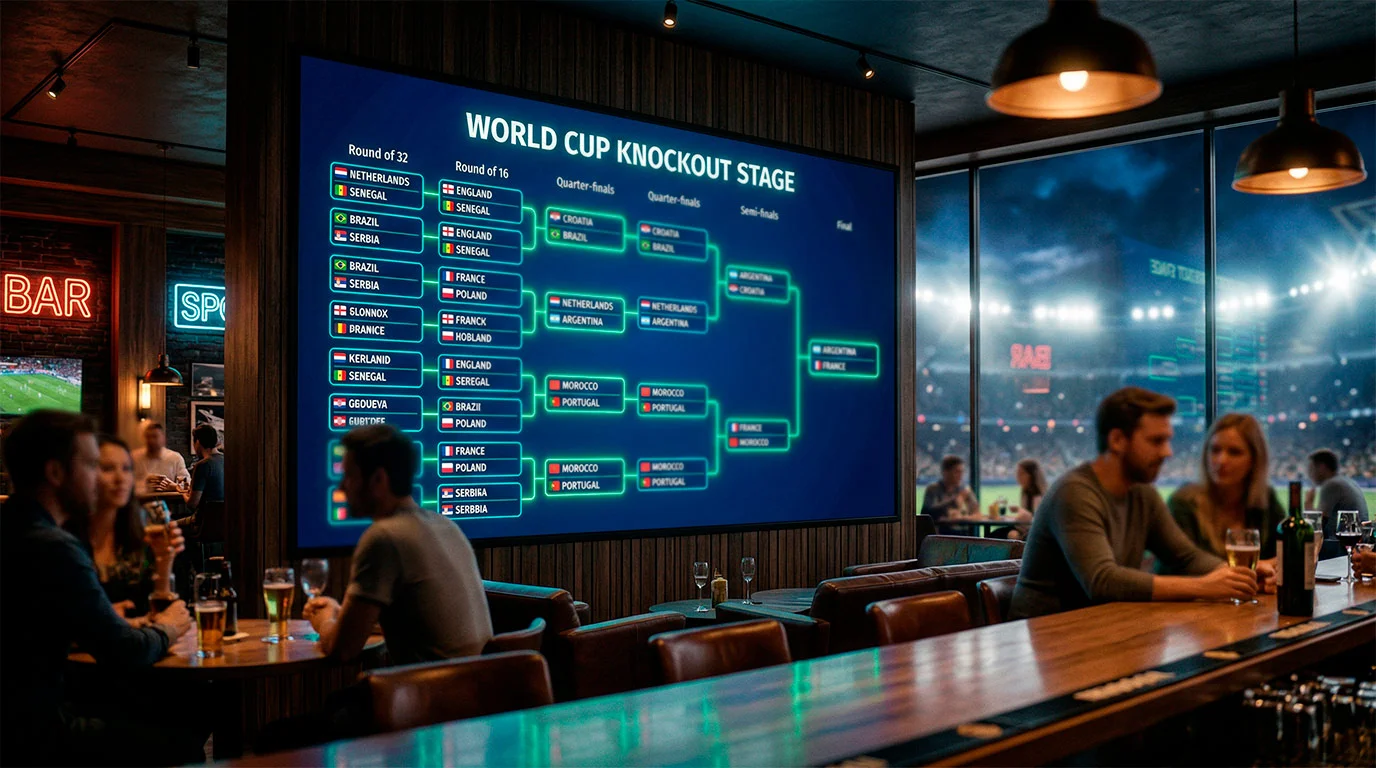
As the tournament narrows to the quarter-finals and beyond, the matches become tighter and lower-scoring. The under 2.5 goals line has hit in 61% of World Cup semi-finals since 1998. In finals, the number rises to 67%. The stakes are too high, the margins too fine, and managers too cautious to play open football at this stage. If you are betting on goals in the knockout rounds, the unders market is your friend from the quarter-finals onward.
One more knockout-specific strategy: watch the path to the final, not just the matchups. The bracket is seeded based on group finishing positions, and some sides of the draw are significantly harder than others. A team that finishes second in a tough group might face an easier route to the final than the team that topped an easy group. Outright prices do not always account for bracket difficulty, and that is where I look for late-tournament value.
Here is a confession: at the 2014 World Cup, I blew through 70% of my bankroll in the first week. Brazil was hosting, the atmosphere was electric, every match felt like an event worth backing. By the quarter-finals, I was scraping together minimum bets and watching teams I had strong opinions on without any skin in the game. That taught me more about bankroll management than any textbook ever could.
The 2026 World Cup runs for 39 days and features 104 matches. That is an average of nearly three matches per day during the group stage. The temptation to bet on every fixture is overwhelming, and it is the fastest way to empty your account. My rule is blunt: I set a total World Cup bankroll before the tournament starts, and that number does not change regardless of results. If I am running hot after the first week, I do not increase my stakes. If I hit a cold patch, I do not chase losses.
A staking plan is not glamorous, but it is the infrastructure that keeps you in the game. I use a flat-stake approach for the World Cup: every bet is the same size, set at 2% of my total bankroll. If my World Cup fund is $500, every bet is $10. No exceptions for “certainties,” no doubling up on the All Whites because my heart says they will beat Egypt. Flat staking removes emotion from the equation, and emotion is the enemy of profitable betting over a 39-day tournament.
The 104-match schedule creates a psychological trap that I call “the matchday grind.” By day ten, you have watched 30 matches, placed a dozen bets, and your attention is splitting. Groups you studied carefully before the tournament are now muddled with live results, injuries, and mid-tournament form shifts. This is when mistakes happen — lazy bets placed on unfamiliar teams because “something is on.” My countermeasure is a pre-tournament target: I identify 25-30 matches where I have a strong opinion, and I only bet on those. Everything else is entertainment.
Record keeping separates punters who improve from punters who repeat their mistakes. I track every bet in a simple spreadsheet: date, match, market, odds, stake, result, and — crucially — my reasoning at the time of placing the bet. After the tournament, I review the reasoning column more than the results column. Bets that won for the wrong reasons teach me nothing. Bets that lost despite sound reasoning tell me my process is right and the variance will even out.
Finally, a word on responsible gambling that is not a legal disclaimer but genuine advice from someone who has seen the other side of it. A World Cup comes every four years, and the emotional highs and lows are amplified by national pride, social pressure, and wall-to-wall coverage. If you find yourself chasing a loss at 2 a.m., if the frustration of a losing bet stays with you longer than the joy of a winning one, step back. TAB NZ offers self-exclusion options and deposit limits that you can set before the tournament starts. The Gambling Helpline NZ is available at 0800 654 655 and provides free, confidential support. A World Cup should be fun. The moment it stops being fun, the smartest bet is no bet at all.
TAB NZ is the only legal option for sports betting in New Zealand, and that has been the case with particular clarity since the June 2025 amendments to the Gambling Act 2003. Offshore operators are now explicitly prohibited from accepting bets from anyone in New Zealand, and the penalties are directed at the operators, not the punters. But the practical effect is the same: if you want to bet legally on the World Cup from Aotearoa, TAB NZ is where you do it.
Setting up an account takes about five minutes. You need to be 18 or older, have a New Zealand address, and provide standard identification. TAB NZ verifies your identity electronically in most cases, though they may request additional documentation. Once your account is active, deposits can be made via bank transfer, debit card, or POLi — the instant bank transfer system that most Kiwi punters use because funds appear in your betting account immediately.
The TAB NZ app is where most World Cup betting will happen. The interface organises football under the “sports” tab, and during the World Cup, FIFA 2026 will have its own dedicated section. Match markets typically open five to seven days before kickoff, though outright markets — tournament winner, group winners, Golden Boot — are already live. The app displays all odds in decimal format, which is the New Zealand standard, and your potential return is calculated automatically as you build your bet slip.
Placing a single bet is straightforward: find the match, select the market, tap the outcome you want, enter your stake, and confirm. For multis, you add selections from different matches to your bet slip, and the app calculates the combined odds. TAB NZ also offers Same Game Multis for individual matches during major tournaments — you can combine match result, over/under goals, and a first goalscorer pick into a single bet on the same fixture. The catch with Same Game Multis is that the bookmaker adjusts the combined odds to account for correlation between the legs, so the payout is lower than multiplying individual odds would suggest.
Withdrawals go back to the method you used to deposit. Bank transfers take one to two business days. There is no fee for withdrawals, and TAB NZ does not hold funds for a waiting period — once processed, the money is on its way. During the World Cup, I recommend withdrawing a portion of any significant winnings rather than letting the balance grow and creating the temptation to increase stake sizes. A consistent bankroll requires discipline on the way up, not just on the way down.
For those who want a more detailed walkthrough of betting on the World Cup from New Zealand, including deposit methods, promotions, and the full legal context, that dedicated page covers it all.
Somewhere in a training camp right now, a squad of players is preparing for the biggest stage of their lives. Somewhere in Wellington or Auckland, a group of All Whites supporters is already planning the viewing party for that Egypt match. And somewhere — maybe at your kitchen table, maybe on your commute — you are reading this World Cup 2026 betting guide and thinking about which angle to pursue first.
The expanded format, the new markets, the third-place qualification route, the 104 matches spread across three countries — all of it creates a tournament unlike anything we have seen before. The punters who succeed will be the ones who understand the structure, respect their bankroll, and find value where others see only favourites and longshots. That process starts with knowledge, and you now have it. Head back to the SixFold homepage for the full coverage map, or pick your next angle and start building your World Cup betting plan.
