
 Available in US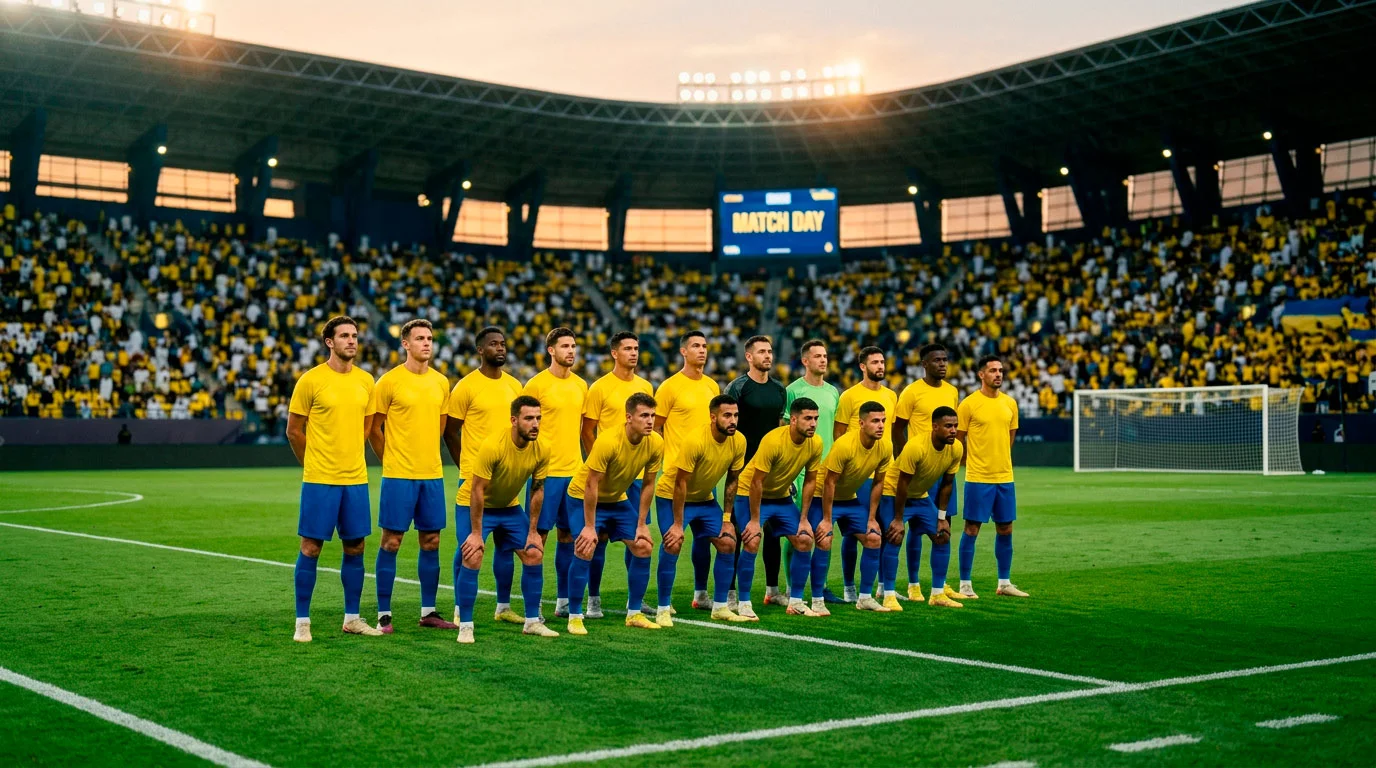
Five stars on the shirt. Zero World Cup titles since 2002. That gap – twenty-four years and counting – haunts Brazilian football like nothing else. Every four years, the Seleção arrive at the tournament as one of the favourites, and every four years the dream ends in tears: a quarter-final exit in 2006, the humiliation of a 7-1 semi-final loss to Germany on home soil in 2014, a quarter-final penalty defeat in 2022. Brazil at the World Cup 2026 is not just another campaign. It is an obsession. The five-time champions are desperate to add a sixth star, and the squad they bring to North America might finally be the one that ends the longest trophy drought in Brazilian football history.
South American qualifying is a war of attrition, and Brazil’s path to the 2026 World Cup was bumpier than the pre-campaign hype suggested. There were unexpected defeats at altitude – the kind of results that send Brazilian sports media into meltdown mode. There were patches where the team looked disconnected, where the talent on paper failed to translate into cohesion on the pitch. The coaching changes during the cycle did not help. Brazil went through a managerial transition that disrupted tactical continuity and forced players to learn new systems mid-campaign.
Despite the turbulence, Brazil qualified. They always do. The CONMEBOL standings tell the story of a team that relied on talent and moments of individual brilliance to compensate for inconsistent collective performance. Vinícius Jr delivered match-winning displays that papered over structural cracks. Defensive lapses in away matches were offset by dominant home performances where the quality gap between Brazil and most South American opponents told. The final position in the table was comfortable enough, but the manner of qualification left questions that the World Cup will answer definitively.
What I took from the qualifying campaign is that Brazil are a team of extraordinary individual parts that have not yet found their optimal collective shape. The attacking talent is world-class across multiple positions. The midfield has options ranging from defensive destroyers to creative number tens. But the balance between these elements – the system that maximises everyone’s contribution – remained a work in progress throughout qualifiers. If the coaching staff solves that puzzle before the opening match, Brazil are genuine title contenders. If they arrive in North America still searching for their best eleven and preferred formation, the group stage could be more dramatic than it should be.
Every generation of Brazilian footballers carries the weight of comparison with those who came before. Pelé, Garrincha, Zico, Romário, Ronaldo, Ronaldinho, Neymar – the lineage is suffocating in its brilliance, and the current generation knows it. Vinícius Jr has emerged as the standard-bearer, and his combination of speed, skill and decisive finishing in the biggest matches makes him the most dangerous wide attacker at the 2026 World Cup. His performances in Champions League finals and knockout rounds demonstrate a player who rises to occasions rather than shrinking from them, and that big-game temperament is exactly what Brazil need after years of collapsing under pressure at World Cups.
Behind Vinícius, the depth of attacking talent is almost absurd. Rodrygo offers a different profile on the opposite flank – more intelligent movement, less raw pace, but equally capable of creating goals from nothing. Raphinha brings energy and work rate that the front line needs for defensive balance. And then there is Endrick. At just 19, Endrick carries the burden of being called the next great Brazilian striker – comparisons to Ronaldo Nazário that would crush most teenagers seem to energise him. He will not start every match, but his impact as a substitute – fresh legs, fearless running, a willingness to shoot from anywhere – could be the X-factor that Brazil have lacked in recent tournaments.
The midfield is where Brazil’s squad depth truly shows. Casemiro’s international career may be winding down, but the options to replace his destructive presence in the holding role are strong. Bruno Guimarães offers a more progressive alternative – comfortable on the ball, capable of breaking lines with passes, and increasingly comfortable in the defensive phase. The creative positions benefit from players who combine technical skill with tactical intelligence, a shift from the historically free-spirited Brazilian midfield towards something more European in its discipline but still distinctly Brazilian in its flair.
Defensively, the centre-back position has been a revolving door for the past cycle. Finding a settled partnership has proven difficult, and the lack of continuity at the back is the single biggest vulnerability Brazil carry into the tournament. The full-back positions, traditionally a Brazilian strength, are adequately covered but lack the transformative quality of a peak Cafu or Roberto Carlos. In goal, Alisson Becker provides world-class security – his shot-stopping, distribution and command of the area would be the envy of almost every nation at the tournament.
The overall squad picture is one of extreme attacking wealth offset by defensive uncertainty. Brazil can outscore most opponents. The question is whether they can keep enough clean sheets to survive the knockout rounds, where a single defensive error can end a campaign in ninety minutes.
Group C is a storyteller’s dream. Brazil versus Morocco is a rematch of their 2022 quarter-final – a match Morocco won to become the first African side to reach a World Cup semi-final. Scotland bring the romance of their travelling support and the pragmatism of a team that knows how to frustrate technically superior opponents. Haiti, making their World Cup debut, represent the most extraordinary qualification story at the tournament – a nation of 11 million people with a footballing infrastructure that runs on passion rather than money.
The Morocco match is the fixture I have circled in red. Morocco’s 2022 run was not a fluke. Their defensive organisation, their tactical discipline under pressure and their ability to score from transitions made them one of the most difficult opponents at the last World Cup. They have maintained that level through the qualification cycle, and the core of the 2022 squad is still available and motivated. Brazil will remember the quarter-final loss vividly, and the desire for revenge adds emotional intensity to a match that is already significant for group-stage positioning. I expect this to be the tightest contest in Group C, and the result will shape the betting landscape for both teams’ knockout paths.
Scotland will set up to frustrate and counter. Their European qualifying campaign showed a team that is difficult to beat even when outclassed technically, and the Scottish fans will create an atmosphere in whatever stadium hosts the fixture that makes it feel like a home game. Brazil’s challenge against Scotland is patience – breaking down a low block without leaving space for counter-attacks. Haiti’s debut will be celebrated regardless of results, but realistically they face a steep challenge against any of their three opponents.
From a betting perspective, Brazil to top the group is priced around 1.55-1.65, which reflects the genuine threat Morocco poses. The value play is in the Brazil versus Morocco match itself. A draw is underpriced in my view – Morocco have the defensive quality to hold Brazil, and the group-stage context (both teams want points but neither wants to lose) encourages caution. The draw at 3.80-4.20 is worth serious consideration. Brazil to win Group C without winning all three matches is an angle that offers better value than the outright group winner market.
Brazil’s outright odds to win the 2026 World Cup typically sit in the 8.00-10.00 range, implying roughly 10-12% probability. That pricing places them behind France and alongside Argentina and England in the tier of genuine contenders. The market is telling you something important: Brazil have the talent to win but carry enough uncertainty to be pushed to longer odds than their pedigree would suggest.
I agree with the market positioning. Brazil’s attacking quality is sufficient to beat any team in the world on a given day. But the defensive inconsistency, the coaching instability and the psychological scars of recent World Cup failures create a risk profile that is higher than France or Argentina. The 2014 semi-final, the 2022 quarter-final penalty miss by a veteran player – these moments reveal a vulnerability under pressure that the current squad has not yet proven it has overcome.
Where I see value is in Brazil to reach the semi-finals. The path from Group C through the round of 32 and round of 16 could be relatively kind depending on the draw, and Brazil’s quality should carry them through to the last eight at minimum. The semi-final market at around 3.00-3.50 offers a better risk-reward ratio than the outright winner, because it removes the requirement for Brazil to peak in a final – historically the stage where their recent campaigns have unravelled.
The top scorer market also offers a Brazilian angle. Vinícius Jr is typically priced in the 12.00-15.00 range for the Golden Boot, which feels generous given his expected role and the volume of chances Brazil’s system creates for him. The 48-team format means more group-stage matches against weaker opponents, and Brazil’s attacking dominance in those fixtures could give Vinícius a head start in the scoring charts that carries through to the knockout rounds.
For decades, Brazil’s tactical identity was simple: attack with flair, defend with prayers and hope the front four outscored whatever the opposition could muster. That romantic approach produced some of the most beautiful football ever played, but it also produced catastrophes – the 7-1 against Germany being the most vivid example. The current coaching setup has tried to modernise Brazil’s tactical approach, introducing more defensive structure, more pressing discipline and more positional play without sacrificing the creative freedom that makes Brazilian football distinctive.
The result is a team in transition. The base formation is likely a 4-2-3-1 or 4-3-3, with the wide forwards given licence to drift inside and combine in the half-spaces while the full-backs provide width. The double pivot in midfield balances defensive security with progressive passing, and the number ten role – if it exists in the chosen system – operates in the space between the opposition’s midfield and defensive lines. This is more structured than the traditional Brazilian jogo bonito, and not every fan approves, but it is built for tournament football where defensive mistakes are punished more severely than in qualifiers.
The tactical question that will define Brazil’s tournament is how they respond when their system is disrupted. Against organised defences that sit deep and deny space – Morocco, for example – Brazil need a plan B that goes beyond “give the ball to Vinícius and hope.” Set pieces, crosses from deep positions, long-range shooting and intelligent movement to create angles against packed defences are all areas where Brazil have invested coaching time. Whether those investments pay off against elite defensive teams is the unknown that makes Brazil’s odds both justified and potentially generous.
One area where Brazil have genuinely improved is in their pressing game. The stereotype of Brazilian players jogging back after losing possession is outdated – the current squad presses with intensity from the front, and the coaching staff has implemented structured pressing triggers that force turnovers in dangerous areas. Vinícius and Raphinha lead the press from the forward positions, their speed making them effective at closing down opposition centre-backs and forcing hurried clearances. When the press works, Brazil regain the ball in areas where they can immediately threaten the goal. When it does not, the space behind the pressing line can be exploited by opponents with quick, accurate passing. Managing that risk-reward balance across seven potential matches at a World Cup is the coaching staff’s primary tactical challenge.
The set-piece dimension deserves attention from bettors. Brazil have historically been weaker at defending set pieces than their overall defensive quality would suggest, and in recent qualifying matches, they conceded from corners and free kicks at a rate that concerns me. At a World Cup, where set pieces decide a disproportionate number of tight matches, that vulnerability could prove costly. On the attacking side, Brazil’s set-piece threat has grown with the inclusion of specialists who deliver consistently dangerous balls into the box, and Alisson’s distribution from goal kicks gives them a launching pad for quick transitions that bypass the opposition’s press entirely.
No country has won more World Cups than Brazil, and no country carries a heavier burden of expectation because of it. The five stars above the badge are not just a historical record. They are a standard. Every Brazilian player who wears the shirt knows that anything less than winning is considered failure by a significant portion of the fanbase. That pressure has been both Brazil’s greatest strength and their most crippling weakness at recent tournaments.
In 2014, as hosts, the pressure became so intense that the team physically and mentally collapsed in the semi-final against Germany. In 2018 and 2022, the expectation manifested as tension in knockout matches – moments where composed decision-making was replaced by anxiety, where players who were brilliant in the group stage became uncertain in elimination football. The 2026 squad is younger and arguably less burdened by that history, but the expectation travels with the shirt, not the player, and every Brazilian who walks onto the pitch in North America will feel it.
From a betting perspective, this psychological profile makes Brazil more volatile than their talent level suggests. They are capable of dismantling any group-stage opponent with displays of attacking brilliance that justify short odds. They are equally capable of freezing in a quarter-final penalty shootout and going home in tears. That volatility is what makes the outright winner market risky but the individual match and stage markets potentially rewarding. Brazil are not a tournament-long bet. They are a match-by-match proposition, and the punter who treats them that way will find better value than the one who backs them outright and hopes for the best.
My approach to Brazil at the World Cup 2026 is selective. I would not back them to win the tournament at 8.00-10.00 because the defensive uncertainty and psychological risk factors are not adequately compensated at that price. But I would back them in several derivative markets where the value is clearer.
Brazil to score over 2.5 goals in the Haiti match is virtually certain and will be priced accordingly – probably around 1.50. The more interesting play is Brazil over 2.5 team goals across the group stage as a whole, which should be available at better odds and accounts for the attacking talent on display across all three fixtures. Brazil’s group-stage goal tallies at recent World Cups have been consistently high, and the Haiti match alone could contribute three or four to the total.
Vinícius Jr in the anytime goalscorer market for individual group matches is a bet I will place in every Brazil fixture. His involvement in attacking play is so central that even when he does not score, he often comes close enough to justify the bet over a multi-match sample. Against Haiti and Scotland, his prices should be around 1.60-1.80, which represents fair value for a player of his output.
The match against Morocco is where the contrarian bet lives. If you believe Morocco can replicate their 2022 performance – and I think they can at least compete – then Morocco draw no bet at around 3.50-4.00 offers an interesting play against the market’s assumption that Brazil will win. The emotional narrative favours Brazil seeking revenge, but the tactical reality favours a tight, low-scoring match where Morocco’s organisation frustrates Brazil’s attacking wealth. Under 2.5 goals in that fixture is another bet I would make with confidence.
Brazil at the World Cup 2026 is the most tantalising proposition in the tournament. The talent is extraordinary. The hunger is real. The squad depth, particularly in attack, is rivalled only by France. But the ghosts of 2014, 2018 and 2022 linger, and no amount of qualifying form or friendly results can exorcise them. Only a deep tournament run – ideally culminating in that sixth star – will silence the doubts.
I will be watching every Brazil match at this World Cup with the same mixture of anticipation and dread that characterises supporting the Seleção in the modern era. They are brilliant and brittle in equal measure. For punters, that combination creates opportunity – but only if you approach Brazil with discipline rather than romance. Back the attacking talent. Hedge the defensive fragility. And never forget that the team with the most World Cup titles has not added to the collection in nearly a quarter of a century. The sixth star is not a birthright. It must be earned against 47 other nations who all believe their own story ends in glory.
