
The All Whites at World Cup 2026 — what actually happened, and what it changes
 Available in US
There is a photograph, taken on 16 June inside SoFi Stadium, of Elijah Just standing with his arms low and open in the sixth minute, mouth barely moving, Iranian defenders still turning to look at where the ball has gone. It is the first frame of the campaign, and — until Ferran Torres wrote the final one five weeks later — it was the frame the All Whites deserved. Three group games later, Aotearoa was out. But if you watched every minute, you did not come away with regret. You came away with a very specific list.
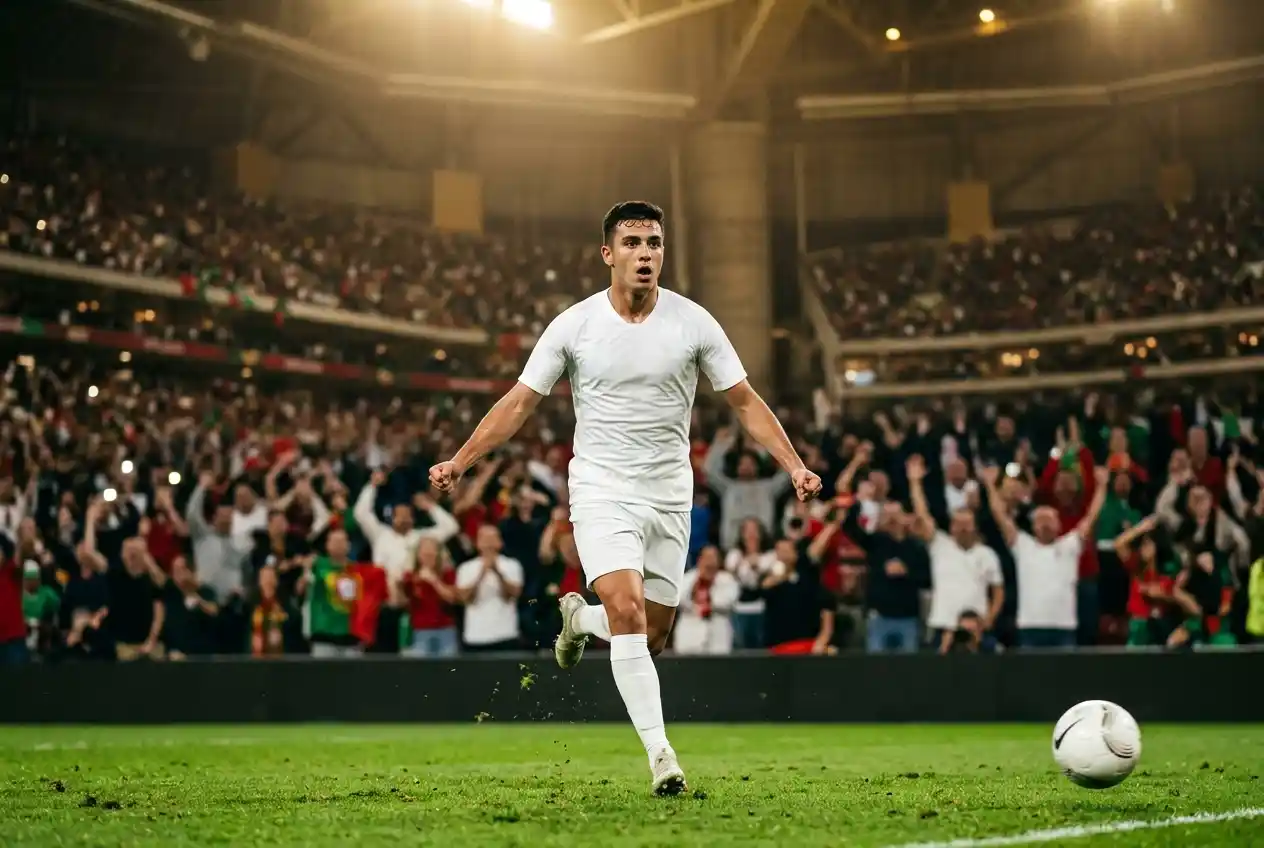
I have been profiling this squad since Darren Bazeley took the job, and the promise of this cycle was always that we would play like we belong. At the end of three games in North America, we did not win one. We also scored in every match, drew our opener with a side ranked well above us, and produced the goal Aotearoa’s football community will still be pulling up on YouTube in five years. Both of those sentences are true. This piece is the honest read of both.
The three matches, in one column
- 16 June, SoFi Stadium, Inglewood — Iran 2-2 New Zealand. Kickoff 1:00pm NZT, so the whole country watched it live. Just scored twice in the first half hour; Iran clawed back. A 2-2 that felt, from Ponsonby to Papatoetoe, like the best result the country had ever taken from a World Cup opener.
- 22 June, Vancouver — Egypt 3-1 New Zealand. Kickoff 1:00pm NZT. Just again, this time in a losing side; a scrappy defensive shift undone by a stronger attack.
- 27 June NZT (26 June local), BC Place, Vancouver — Belgium 5-1 New Zealand. Kickoff 3:00pm NZT, the last of our three afternoon fixtures. Just volleyed home from the edge of the area late on to make it 3-1 and, briefly, a contest. Then the pressure told. 5-1. Group G bottom. Out.
Bottom of the group, one point, three goals for, ten against. That is the ledger.
- The All Whites finished bottom of Group G with one point (2-2 Iran, 1-3 Egypt, 1-5 Belgium) — but scored in every match of the campaign.
- Elijah Just scored all three New Zealand goals, including a first-half brace against Iran in the opener at SoFi Stadium.
- All three group games kicked off in the early NZ afternoon — 1:00pm, 1:00pm and 3:00pm NZT — so the country watched the whole campaign live, without a single 3am alarm.
- Chris Wood captained the side through all three matches; his physical presence created the base Just’s pace could feed off.
- The exit put the Oceania automatic-qualifier debate back in headlines abroad, but the domestic conversation was different — money, minutes, and what the pathway looks like now.
Eli Just and the sixth minute
If you were watching in a Wellington living room at 1pm on the Tuesday, you got a full 90 minutes to memorise it. Sixth minute: the ball dropped to Just at the edge of the box, he shaped once, and he hit a swerving right-foot strike that beat Iran’s keeper high to his left. Inside the same half he had a second, and New Zealand had a lead at a World Cup that nobody in the country had planned an afternoon around.
He finished with three goals in three games — every goal the All Whites scored at the tournament — and the top individual takeaway from a group where the collective could not survive.
Chris Wood, the anchor
Wood came into the tournament off a Nottingham Forest season interrupted by injury. He did not score in North America. He also did not need to. Against Iran he pinned centre-halves for 90 minutes; against Egypt he chased lost causes; against Belgium he ran into a storm and stayed captain of a team that pulled a goal back at 3-1. The Vancouver scoreline made the pre-tournament optimism harder to defend. The tape does not disagree with the intent.
What the campaign actually asked of us
Nobody set out to make money on the All Whites; the outrights to lift the trophy were prohibitive, and rightly so. The interesting question was always the one the expanded 48-team format opened up — whether a side that draws its opener and steals something from the second game can survive as a best third-placed team. New Zealand answered the first half of that question inside six minutes on 16 June, and then could not answer the second.
That is not a small thing to have learned. It is the first time in the modern era that the maths were genuinely available to an Oceania side, and the squad got to find out in real time what the gap between "available" and "achievable" actually costs.
The money, the medium, and what changes now
The direct financial return from a group-stage campaign will not build a stadium. It will lengthen the runway for the age-group programmes that produced Just, Surman, and half of the squad that ran itself into the ground at BC Place. The bigger structural conversation — the one that got louder overseas as Group G ended, about whether Oceania’s automatic slot survives to 2030 — will land in New Zealand differently. We qualified. We scored in every game. The counter-argument writes itself.
What we take home
If you are looking for a single line, it is this: New Zealand went to a World Cup that Spain won in extra time, held Iran, stayed in the Egypt game for an hour, and produced three goals through one attacker. We finished bottom of the group. We also came home with a squad that just got 270 minutes of first-hand experience of top-tier international football, a captain who took the shots and never dropped his shoulders, and a 26-year-old attacker whose price at every big club in Europe just moved.
For the tournament’s other big Kiwi angle, see our Eli Just story. For the champion’s arc, the Spain 2026 tournament story is the best read on the eight-match run. For deeper All Whites background — squad, group draw, kickoff windows in NZ — see our All Whites World Cup 2026 page, Group G analysis, and BC Place stadium notes.
