
Spain, World Champions 2026 — the story of eight matches and one conceded goal
 Available in US
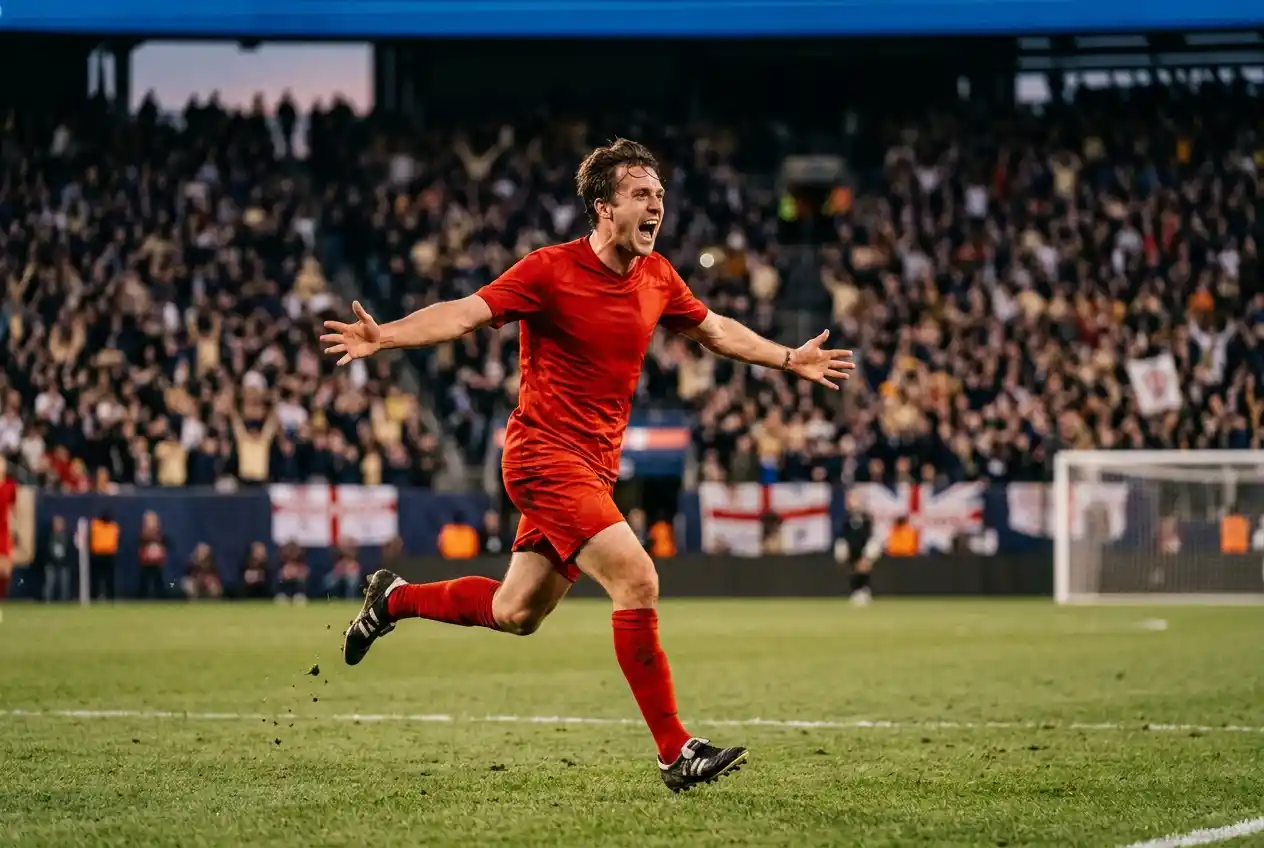
The Auckland alarm clocks went off at 7am on Monday morning, 20 July, and by the time the kettles had boiled, Ferran Torres was still peeling away toward the MetLife corner flag, arms out, mouth wide, boots trailing an offcut of turf. It was 105 minutes and 39 seconds into a match that had refused to break — the 106th minute, 39 seconds after the second period of extra time began. A Pedro Porro cross, a Nico Williams header, a substitute finishing past Emiliano Martínez with his left foot — two men off the bench combining to end 90 minutes of stubborn nil-nil, and to end Lionel Messi’s last World Cup with a Silver Ball. That is the moment. But the tournament was decided long before it.
The number that says it all
Spain conceded one goal in eight matches. One. Across a 48-team format that put more games in front of a champion than any World Cup before it, Luis de la Fuente’s side kept seven clean sheets. No World Cup winner has ever managed a defensive record like it. To hold that line through a Portugal in the round of 16, a Belgium in the quarter, a France in the semi and an Argentina in the final is not a run of luck; it is a project.
The project has been building since Euro 2024, and Kiwi punters watched it price accordingly. Spain went into the final at 1.67 to lift in TAB NZ decimal — the shortest outright of the knockout phase after their 2-0 dismantling of France on 14 July. In the 90-minute 1X2 the draw was 2.95-3.00, and the draw came in. In the "to lift the trophy including extra time and penalties" market, the favourite delivered. Both settled — but not the same way.
- Spain won all eight matches at the tournament, conceded just one goal, and kept seven clean sheets — no World Cup champion has ever done better defensively.
- The 38-match unbeaten run set a new outright international record, past Italy’s 37.
- Spain now hold the Euro 2024 + World Cup 2026 double, and — with the women’s 2023 title — become the first nation ever to hold the men’s and women’s World Cups at the same time.
- The final settled the outright (Spain to lift, 1.67 at TAB NZ) but the 90-minute 1X2 paid the draw (2.95-3.00) after a goalless regulation.
- Rodri’s Golden Ball at ~11.00 was the one big market upset of the tournament — every other pre-final favourite (Spain, Mbappé, Simón) delivered.
The road, match by match
Spain came out of Group H with seven points — untidy on paper, ruthless in effect. Then the knockout run began, and the pattern set in: bend, do not break, take the one chance you get.
- R32: 3-0 Austria. First shift, no wobble.
- R16: 1-0 Portugal. The closest thing to a scare, settled by a single moment.
- QF: 2-1 Belgium. The only goal Spain conceded at the entire tournament came here, and it did not cost them.
- SF: 2-0 France. Kylian Mbappé held to a quiet 90; Michael Olise’s assist record was already climbing but France could not turn possession into goals.
- Final: 1-0 Argentina (a.e.t.). Ferran Torres 106′.
Read that list again. One conceded goal, in the quarter-final, across the whole run. That is the story, told in ninety seconds.
Rodri: from a September 2024 ACL to captain of the champions
If you want the narrative arc, it is Rodri. He ruptured his right ACL in the Premier League in September 2024 and missed most of the 2024-25 season. Pep Guardiola said, in the aftermath, that "the real Rodri" would return at the 2026 World Cup. On 19 July, roughly twenty months post-surgery, he lifted the trophy as captain, held the Golden Ball at the ceremony, and told The National, "It feels like the perfect script. I certainly didn’t expect this."
He also finished the tournament with about 756 completed passes — the single-edition record, past Xavi’s 599 from 2010. That is what a 4-3-3 built for control looks like when the man in front of the back four never gives it away.
Ferran Torres: the sub who finished it
Ferran Torres came on for Mikel Oyarzabal in the 62nd minute of a final that felt like it was heading for penalties. He had not scored at the tournament. Thirty-nine seconds into the second period of extra time, Pedro Porro whipped a delivery from the right, Nico Williams — himself a substitute — climbed above Nahuel Molina and knocked it back, and Ferran hit it first time with his left foot, low past Emiliano Martínez. He told Yahoo Sports afterwards, "I just saw the ball coming to me and I just shot with the power of all the Spanish people."
Two substitutes combined for the World Cup-winning goal. It is the kind of ending you would not write, because no editor would let you.
The market read, in decimal
If you were setting a book at TAB NZ, the closing lines told the truth by the end.
- Outright: Spain 1.67, settled Spain. Favourite delivered.
- Golden Boot: Kylian Mbappé 1.04, settled Mbappé (10 goals; Messi held scoreless in the final, finished on 8).
- Golden Glove: Unai Simón 1.13, settled Simón (seven clean sheets in the edition, six consecutive across two World Cups, 650 consecutive World Cup minutes — three separate records).
- Golden Ball: Messi 1.11, settled Rodri at ~11.00. The one that hurt the books’ books.
- Best Young Player: Pau Cubarsí (19), a Spain sweep on team-based awards.
Every favourite except the Golden Ball came in. If you priced Spain up in December and stayed with them, this was a rare tournament where the market and the pitch agreed.
What Argentina lost, and what Messi kept
Argentina were 90 minutes from being the first back-to-back World Cup champions since Brazil in 1958 and 1962. They did not get there. Enzo Fernández was sent off in the 90+3rd minute for a second yellow, a reckless foul on Pau Cubarsí. Argentina played extra time a man down. Emiliano Martínez made 11 saves — the most ever recorded by a goalkeeper in a World Cup final — but the one that beat him decided the tournament.
Lionel Messi finished eight goals, four assists, the Silver Ball. He lost the all-time World Cup goals record on the way (Mbappé now leads on 22 to his 21) but he keeps the appearance record and the assist record. He told Bleacher Report at full time, "I feel sad, but I am aware that we played our hearts out." Widely reported as his last World Cup at 39. The image at the medal ceremony — Spain forming a guard of honour, Messi in tears — is the one that will travel.
The Kiwi frame
For a New Zealand fan the tournament will always split into two halves: the fortnight our All Whites were in it, and the month after they were not. But if you followed the outright market from Auckland into the last week, you watched Spain close at 1.67 to lift and then do exactly that — the biggest market of the year settling on its favourite, even if it took an extra thirty minutes to get there. On this side of the Pacific, this World Cup was worth setting an alarm for.
For the full match-by-match settlement and NZ times, see our World Cup 2026 final recap and the Rodri Golden Ball story. For the Kiwi frame on the tournament, our All Whites World Cup 2026 review walks through every one of the three group games. Broader analysis lives on the Odds and Predictions pillar.
Sources: Wikipedia (2026 FIFA World Cup final), ESPN, Yahoo Sports, FIFA, PBS, The National, Bleacher Report, beIN Sports — all published 19-20 July 2026.
