
 Available in US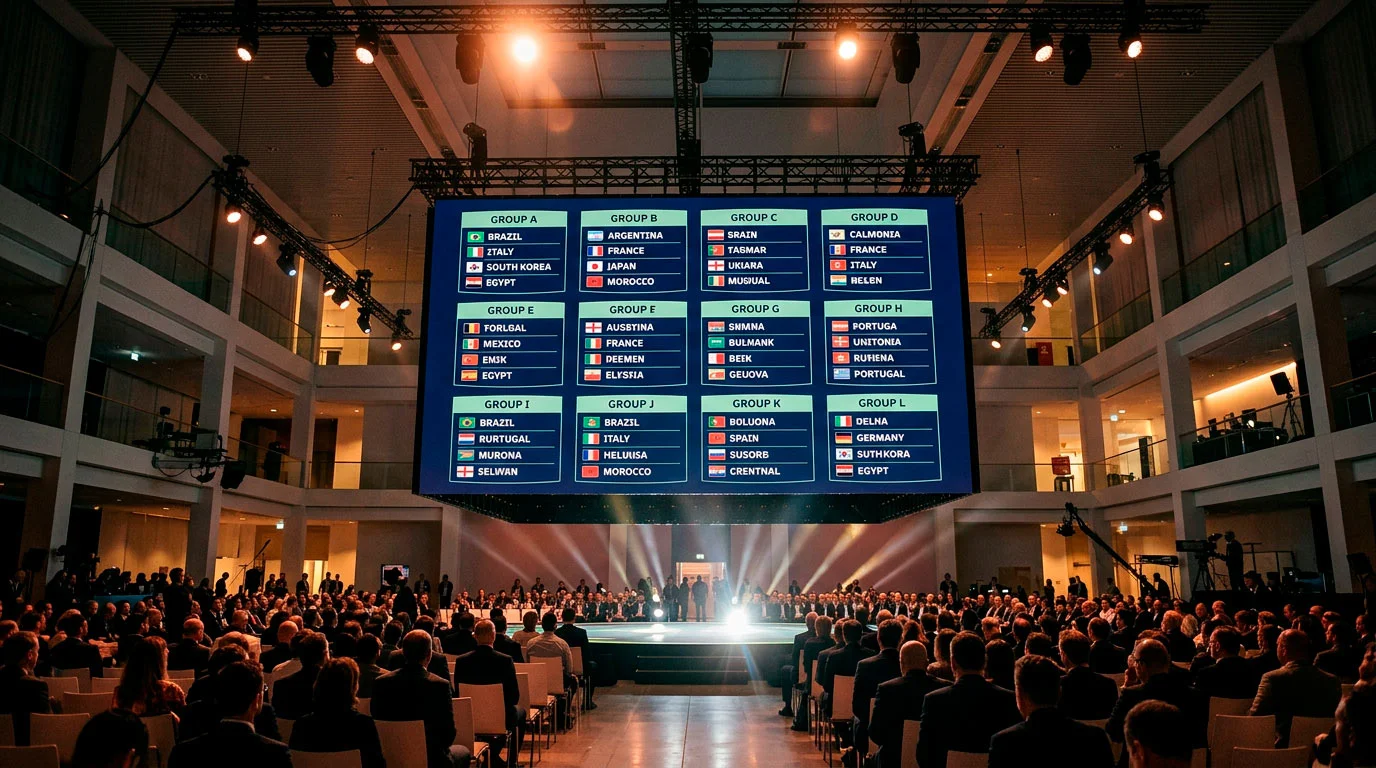
The draw ceremony lasted 90 minutes. By the time it was over, 48 nations knew their fate — three opponents, three matches, and a window of roughly two weeks to prove they deserved to stay in the tournament. For those of us who analyse the World Cup 2026 groups for a living, the draw was not the end of the story. It was the first page.
Twelve groups of four. The top two from each advance automatically. The eight best third-placed teams join them in the round of 32. That structure — new to the World Cup — means every group contains at least two realistic qualification spots and a third that is tantalisingly within reach for the underdogs. The draw handed some nations a golden path and others a corridor lined with landmines.
I have spent the weeks since the draw feeding every group into my predictive model, cross-referencing Elo ratings, recent form, squad depth, and the peculiarities of venue allocation. Some groups confirmed what the market already expected. Others threw up anomalies that the odds have not yet corrected. Here is every group’s story, told from the perspective of someone who has already started building a betting model around each one, starting with the groups that open the tournament and ending with the one that matters most to every reader in New Zealand.
If you followed the last five World Cups, erase everything you know about the group stage bracket and start fresh. The 48-team format rewrites the mathematics of qualification, and if you do not understand the new structure, you will misread every group’s dynamics.
Twelve groups of four teams each produce 48 group-stage matches over the first two weeks. Each team plays three matches — one against each group rival. Three points for a win, one for a draw, zero for a loss. The top two finishers in each group progress to the round of 32, giving us 24 automatic qualifiers. Then comes the twist: the eight best third-placed teams from across all twelve groups also advance. That brings the knockout field to 32 — the same number that started previous World Cups.
The third-place rule changes everything for betting. In the old 32-team format, finishing third in a group of four meant elimination. Now, finishing third is a genuine pathway. Eight of twelve third-placed teams go through, which means only four go home. The qualifying threshold for the best third-placed teams is likely to sit around three or four points with a neutral or positive goal difference. A team that draws two matches and loses one can still advance if their goal difference is competitive.
For punters, this means the “to qualify” market is significantly more generous than it looks at first glance. A side like New Zealand in Group G does not need to beat Belgium — they need to accumulate enough points and goals to rank among the top eight third-placed finishers. That is a materially different proposition, and the odds should reflect it. In my experience, the market is still adjusting to this dynamic, creating value opportunities on lower-ranked teams in difficult groups.
The knockout bracket is seeded: group winners are paired against third-placed qualifiers in the round of 32, and group runners-up face each other. This seeding means that topping your group is not just about pride — it directly determines the difficulty of your path to the quarter-finals. A group winner facing a third-placed team from a weak group has a significant edge, while a runner-up facing another runner-up faces a near-coinflip in the first knockout round.
The tournament begins here. Mexico versus South Africa at Estadio Azteca on 11 June — an opening match in football’s most legendary stadium, with over 80,000 fans creating the kind of atmosphere that can paralyse visiting teams. Mexico are favourites to top the group, and the draw has been kind to them. South Korea bring star power through Son Heung-min and a disciplined tactical structure, but they have historically struggled in the Americas, where the travel fatigue and climate shift hit harder than in European or Asian tournaments. South Africa are back at the World Cup for the first time since hosting in 2010, and their squad has improved markedly through players competing in European second-tier leagues. The UEFA Playoff D winner — likely to be one of Czechia, Ireland, Denmark, or North Macedonia — completes the group. Mexico to top, South Korea to take second, and the Playoff D winner to battle South Africa for third-place survival is my baseline read.
Group B is the one I cannot fully assess until the UEFA Playoff A is resolved, because the difference between Italy qualifying and, say, Bosnia qualifying changes this group from competitive to lopsided. If Italy come through, Group B becomes a three-way fight between Canada, Switzerland, and Italy — one of the most balanced groups in the tournament. If a weaker side qualifies, Canada on home soil and Switzerland’s perennial reliability should see them through comfortably. Qatar, the 2022 hosts, were the worst-performing host nation in World Cup history, losing all three group matches without scoring a goal. Unless there has been a dramatic improvement — and their Asian Cup results do not suggest one — Qatar are heading for another early exit. I am holding off on Group B bets until the playoff picture is clear, and I recommend the same.
This is the group that has me reaching for my notebook every time I look at it. Brazil versus Morocco is a potential classic — two teams with genuine knockout-stage pedigree meeting in the groups. Morocco’s 2022 semi-final run was built on the best defensive record in the tournament, and Walid Regragui’s side have maintained that structure. Brazil’s attacking talent — Vinícius Júnior, Rodrygo, Endrick — is extraordinary, but their defensive inconsistency in CONMEBOL qualifying is a vulnerability Morocco will target. Scotland return to the World Cup after missing 2022 and bring a pragmatic, organised approach under Steve Clarke. They will not beat Brazil, but a point against Morocco would throw the group wide open. Haiti are the group’s debutants, qualifying through CONCACAF with a run that captured the footballing world’s imagination. Their journey is the story, not their chances of advancing. Brazil top, Morocco second, Scotland fighting for a third-place lifeline — that is my framework for Group C.
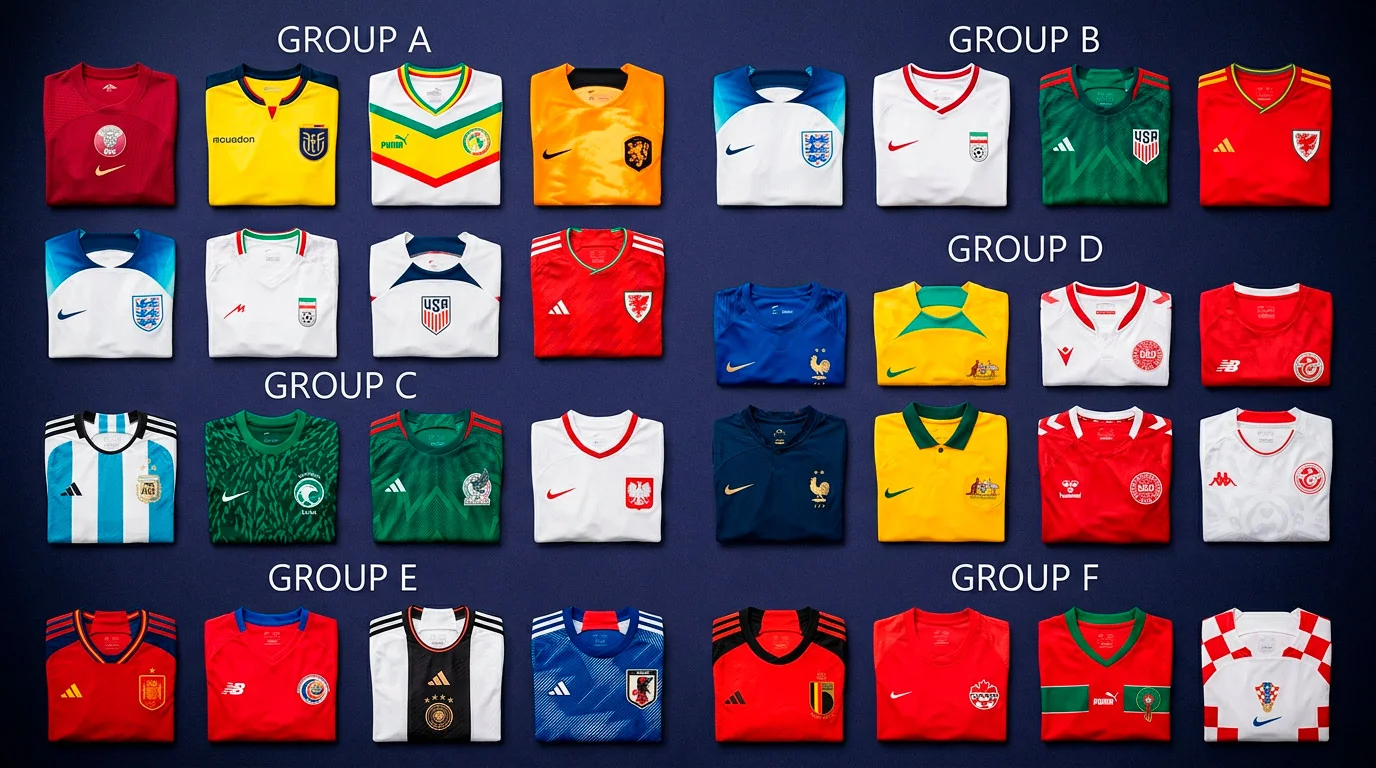
The USA are the group’s headline act, and the question is not whether they qualify but how dominant they look doing it. Playing all three group matches on home soil — a luxury no other host nation in 2026 enjoys to the same degree — the Americans have a crowd advantage that borders on decisive. Christian Pulisic, Weston McKennie, and a young squad hardened by European club football give the USA the quality to match the atmosphere. Paraguay are defensively solid under Alfaro and will not gift anyone points. Australia, the Socceroos, reached the round of 16 in 2022 and have a similar pragmatic blueprint. The UEFA Playoff C winner — potentially Turkiye, Romania, Slovakia, or Kosovo — is the variable. If Turkiye emerge, Group D becomes a genuine four-way contest. Otherwise, the USA and Australia should advance, with Paraguay taking the third-place gamble.
Germany have been handed the easiest draw they could have hoped for, and after the trauma of hosting Euro 2024 and exiting in the quarter-finals, a gentle group stage is exactly what they need. Florian Wirtz and Jamal Musiala are the creative heartbeat, and the supporting cast has been refreshed since the European disappointment. Côte d’Ivoire are the Africa Cup of Nations holders and the group’s clear second seed — a team with pace, power, and enough Premier League experience to avoid stage fright. Ecuador bring South American grit and a solid qualifying campaign, but their squad depth is thinner than the continent’s heavyweights. Curaçao, the smallest nation in the tournament by population, are here to celebrate rather than compete for qualification. Germany to top with minimal stress, Côte d’Ivoire to join them, and Ecuador to fight for third place with a points total that may not be enough.
Group F is the sleeper group of death. The Netherlands are seeded first, but Japan’s recent World Cup record against European opposition — beating Germany and Spain in 2022 — makes them a genuine threat to top the group. The Dutch play a structured, possession-based game that Japan’s high press is specifically designed to disrupt, and the direct matchup between these two could be the best group-stage fixture of the tournament. Tunisia are Africa’s most experienced World Cup campaigners and always tough to beat in the opening match. The UEFA Playoff B winner — Sweden, Ukraine, Poland, or Albania — adds another layer of uncertainty. If Sweden or Poland come through, Group F has four teams capable of beating each other on any given day. I have this group flagged as my primary target for live betting during matchdays two and three, when the permutations will create chaotic pricing in the markets. The full odds breakdown for every group is available on the dedicated analysis page.
This is the group every reader of this site cares about most, and it deserves the space. Belgium are the top seed, and despite the narrative of a golden generation fading, Kevin De Bruyne and Romelu Lukaku remain among the most dangerous players in international football. Belgium will be favoured to top the group, and the market prices them at around 1.55 to do so. But this Belgian side is not the one that reached the 2018 semi-final with fluid, attacking football — it is an older, more pragmatic version that grinds through matches rather than dominating them.
Egypt bring Mohamed Salah, arguably the best player in any group outside the top seeds. Salah’s presence alone elevates Egypt from a mid-tier African side to a team capable of beating anyone on matchday. Egypt qualified through the CAF system and their attacking quality — Salah, Mostafa Mohamed, Trézéguet — gives them genuine firepower. Defensively, they are less certain, which opens the door for opponents willing to press high and take risks.
Iran’s situation is the asterisk on Group G. The ongoing geopolitical conflict involving the US and Iran has thrown Iran’s participation into doubt. Iran’s sports minister has spoken about refusing to participate, while the Iranian Football Federation president has taken a more nuanced position — willing to play but unwilling to accept matches on American soil. FIFA denied Iran’s request to relocate matches to Mexico. As of late March 2026, no resolution has been reached. If Iran withdraw, the most likely replacements are the UAE or Iraq, depending on the outcome of the intercontinental playoff on 31 March. A replacement team would almost certainly be weaker than Iran, which would improve New Zealand’s chances of collecting points in the opening match at SoFi Stadium.
The All Whites complete Group G, and their story is covered in detail on the dedicated All Whites page. The short version: New Zealand qualified by winning all five OFC matches with a goal difference of +28, which tells you they were dominant in their confederation but does not tell you much about how they will fare against Belgium, Egypt, or Iran. The realistic target is third place with enough points to sneak through as one of the best third-placed teams. Two draws from three matches — or one win and two losses with a competitive goal difference — could be enough. The schedule is kind: two of three matches are in Vancouver, the closest World Cup venue to New Zealand, and the Kiwi diaspora in western Canada is large enough to create a genuine home atmosphere at BC Place. The full Group G preview breaks down every fixture and scenario.
Spain are the European champions and the clear group favourites. Their squad — young, technically brilliant, and tactically cohesive — should dominate this group without needing to peak. Uruguay under Marcelo Bielsa play with an intensity that makes them dangerous against anyone, and the Spain-Uruguay match on matchday two could be the group stage’s best tactical encounter. Saudi Arabia carry the memory of their stunning victory over Argentina in the 2022 opening match, but that result was an outlier rather than a trend — their subsequent group performances were poor. Cabo Verde are the tournament’s smallest nation and are here to compete in every minute rather than qualify. Spain top, Uruguay second, and the battle for third place between Saudi Arabia and Cabo Verde is unlikely to produce enough points for a third-place berth.
France are France — the deepest squad in the tournament, led by Kylian Mbappé, and expected to stroll through the group stage. The interesting battle is for second place. Senegal are the strongest African contender after Morocco, with a squad packed with European club talent and a tactical setup that thrives on counter-attacking speed. Norway have Erling Haaland, and in a tournament where one player can carry a team through three group matches, Haaland’s presence makes Norway a dark horse worth watching. The Intercontinental Playoff 2 winner — likely Iraq or Bolivia — will be the group’s weakest team. France to top, and the Senegal-Norway battle for second is the Group I storyline worth following for betting purposes.
Argentina are the defending world champions and the heaviest group-stage favourite in the entire tournament. Their Group J opponents — Algeria, Austria, and Jordan — are competitive sides, but none of them has the quality to sustain a challenge across three matches against Lionel Scaloni’s machine. Algeria have passionate support and a counter-attacking style that can trouble disorganised defences, but Argentina are not disorganised. Austria under Ralf Rangnick play a high-pressing, high-energy game that could cause Argentina problems in a one-off match, and the Austria-Argentina fixture is the one I have circled for a potential upset. Jordan, the 2023 Asian Cup runners-up, are the group’s outsiders but showed enough in that tournament to suggest they will not roll over. Argentina to top, Austria to take second, and Algeria and Jordan scrapping for third is my prediction.
Group K is the group where I expect the biggest swing in betting markets during the tournament. Portugal and Colombia are both top-15 sides with genuine World Cup ambitions, and the head-to-head between them — likely on matchday two — will define the group’s outcome. Portugal’s squad is ageing in key positions, and the Cristiano Ronaldo situation adds a layer of uncertainty that the market has not fully priced in. Colombia, fresh from their Copa América final appearance, play with a flair and energy that could overpower Portugal if the match is played at pace. Uzbekistan are a rising Asian football power with a young squad, but their World Cup debut will be a steep learning curve. The Intercontinental Playoff 1 winner — DR Congo, Jamaica, or New Caledonia — rounds out the group. Portugal to top at 1.55 feels too short; Colombia to top at 2.80 represents better value.
England versus Croatia is a rivalry that the World Cup has forged in recent memory — Croatia knocked England out of the 2018 semi-final, and the psychological scar still lingers. This match will likely decide who tops the group, and the atmosphere will be electric. England are the stronger squad on paper, with Jude Bellingham, Bukayo Saka, and Phil Foden forming the most creative attacking trio in the tournament. Croatia’s Luka Modrić will be 40 and playing in what is almost certainly his final World Cup, and the emotional fuel of a farewell tournament should not be underestimated. Panama qualified through CONCACAF with a gritty, defensive approach, and Ghana’s group-stage record is inconsistent — brilliant one match, anonymous the next. England to top, Croatia to take second, and a potential third-place escape for Panama if they can grind out a draw against Ghana.
Every World Cup produces at least one group that makes pundits wince and punters rub their hands. In 2026, the expanded format dilutes the concentration of elite teams in any single group — with 12 groups and 48 teams, the top seeds are spread thinner than in a 32-team tournament. But dilution does not mean safety, and three groups stand out as the most competitive.
Group C is my pick for the tournament’s most dangerous group. Brazil and Morocco are both realistic semi-finalists, and only one of them can finish in the top two. Scotland, while a tier below, are organised and stubborn enough to take points off either side. The Brazil-Morocco match is a fixture between the 2022 quarter-finalists and semi-finalists — a calibre of opposition that would not look out of place in the knockout stage. For betting, Group C means volatile pricing and late-matchday drama. The “group winner” and “to qualify” markets will swing wildly after matchday one, and live betting on matchday three — when all four teams play simultaneously — will be frantic.
Group F has the characteristics of a death group without the headline names. The Netherlands are a good team, not a great one, and Japan’s track record against European opposition makes them a genuine threat. Tunisia always perform above their ranking in World Cups, and the UEFA Playoff B winner could add another competitive side. This is the group where a top seed failing to advance would surprise no one. If Japan beat the Netherlands in the direct match — and the 2022 precedent is hard to ignore — the group flips entirely.
Group K, with Portugal and Colombia, is the third group I classify as death-adjacent. Both teams have the squad quality to reach the quarter-finals, but only two spots are available in the top two. The tension between these sides will spill over into every aspect of the group — goal difference calculations, tactical caution, and the kind of matchday-three scenarios where both teams are checking results from other pitches. For punters, Group K’s unpredictability makes it an ideal target for pre-tournament group winner bets at enhanced odds. Backing Colombia to top the group at 2.80, when I believe the true probability is closer to 35%, is the kind of edge that a group of death provides.

No aspect of the 2026 World Cup format is less understood by casual punters than the third-place qualification route, and that gap in understanding is exactly where value hides. Eight of the twelve third-placed teams will advance to the round of 32. Only four go home. For teams in groups with a dominant top seed, the third-place route is not a consolation prize — it is a strategic objective.
The ranking of third-placed teams is determined by points first, then goal difference, then goals scored, and finally by FIFA rankings as the final tiebreaker. Based on modelling from previous tournaments that used a similar third-place system — the European Championship has used it since 2016 with 24 teams — the typical qualifying threshold sits at three points with a goal difference of zero or better. At Euro 2016, Portugal qualified as one of the best third-placed teams with three points and a goal difference of zero. At Euro 2020, the threshold was four points.
For the 2026 World Cup, I expect the threshold to be three points with a goal difference of -1 or better, possibly even lower. The reason is the expansion to 48 teams. Several groups contain a clear top two — Group E (Germany and Côte d’Ivoire), Group J (Argentina and Austria), Group H (Spain and Uruguay) — and in those groups, the third-placed team will likely finish with one or two points and a negative goal difference. Those weak third-placed finishers drag the overall qualification line downward, creating space for third-placed teams from tougher groups to squeeze through with relatively modest totals.
The betting implication is direct: “to qualify” odds for underdogs in competitive groups are often too long. The market prices these teams based on the probability of finishing in the top two, but the third-place route adds a second pathway that the odds do not fully capture. New Zealand at 5.00 to qualify from Group G is a price set primarily by the difficulty of finishing above Belgium and Egypt. But the third-place route means New Zealand can finish behind both of them and still advance — and that pathway brings the true qualification probability significantly closer to 30% than the implied 20% the odds suggest.
My recommendation for third-place route betting is to wait until matchday two results are in. At that point, you will know which groups have produced strong third-placed contenders and which have not. The live odds on “to qualify” markets will adjust rapidly, and teams with four points after two matches — a win and a draw — will be near-certainties for qualification even if they lose their final group match. Identifying those situations in real time is one of the most profitable strategies available at a 48-team World Cup.
Twelve groups, forty-eight teams, and a format that rewards patience, tactical intelligence, and just enough nerve to take a risk when the odds tilt in your favour. The draw has set the stage. Brazil and Morocco will battle in Group C. Japan will test the Netherlands in Group F. England and Croatia will renew their rivalry in Group L. And in Group G, the All Whites will walk onto the pitch at SoFi Stadium knowing that an entire country is watching from the other side of the Pacific.
The group stage is where World Cup fortunes are built and where betting value concentrates. The third-place qualification route, the matchday-by-matchday rhythm, and the sheer volume of 48 group matches in 12 days create a window of opportunity that will not exist once the knockouts begin. Every group I have broken down in this guide contains at least one pricing anomaly — a team the market is undervaluing, a fixture where the odds do not match the tactical reality, or a qualification scenario the implied probabilities have not fully absorbed. The full team previews provide the squad-level detail behind each group’s dynamics, and the SixFold homepage connects you to every angle of our tournament coverage.
Study the groups, understand the permutations, and place your bets before the opening whistle in Mexico City. The stories are about to be written, and the punters who read the draw correctly will be the ones collecting when the group stage is over.
